BIG Suite Units — Software Testing SaaS Platform
Solo Product Designer
Solo Product Designer
Solo Product Designer
Solo Product Designer
Full Product Design
UX Architecture
High-Fidelity UI
Design System
Light/Dark Themes
Full Product Design
UX Architecture
High-Fidelity UI
Design System
Light/Dark Themes
Full Product Design
UX Architecture
High-Fidelity UI
Design System
Light/Dark Themes
Full Product Design
UX Architecture
High-Fidelity UI
Design System
Light/Dark Themes
Apr 2024 — July 2024
Apr 2024 — July 2024
Apr 2024 — July 2024
Apr 2024 — July 2024
Internal Tool
Internal Tool
Internal Tool
Internal Tool
01. Product Context & Constraint
Suite Units is an internal testing platform for QA teams running large automated test suites. Before this product existed, there was no interface — just raw developer tooling. The brief: design a full product from scratch based on developer specifications and direct interviews with the team
The core constraint was speed of interpretation. QA engineers run hundreds of tests and need to know immediately what failed, why, and who's looking into it. Every extra click between "something broke" and "I understand the problem" is wasted time
02. Design Approach
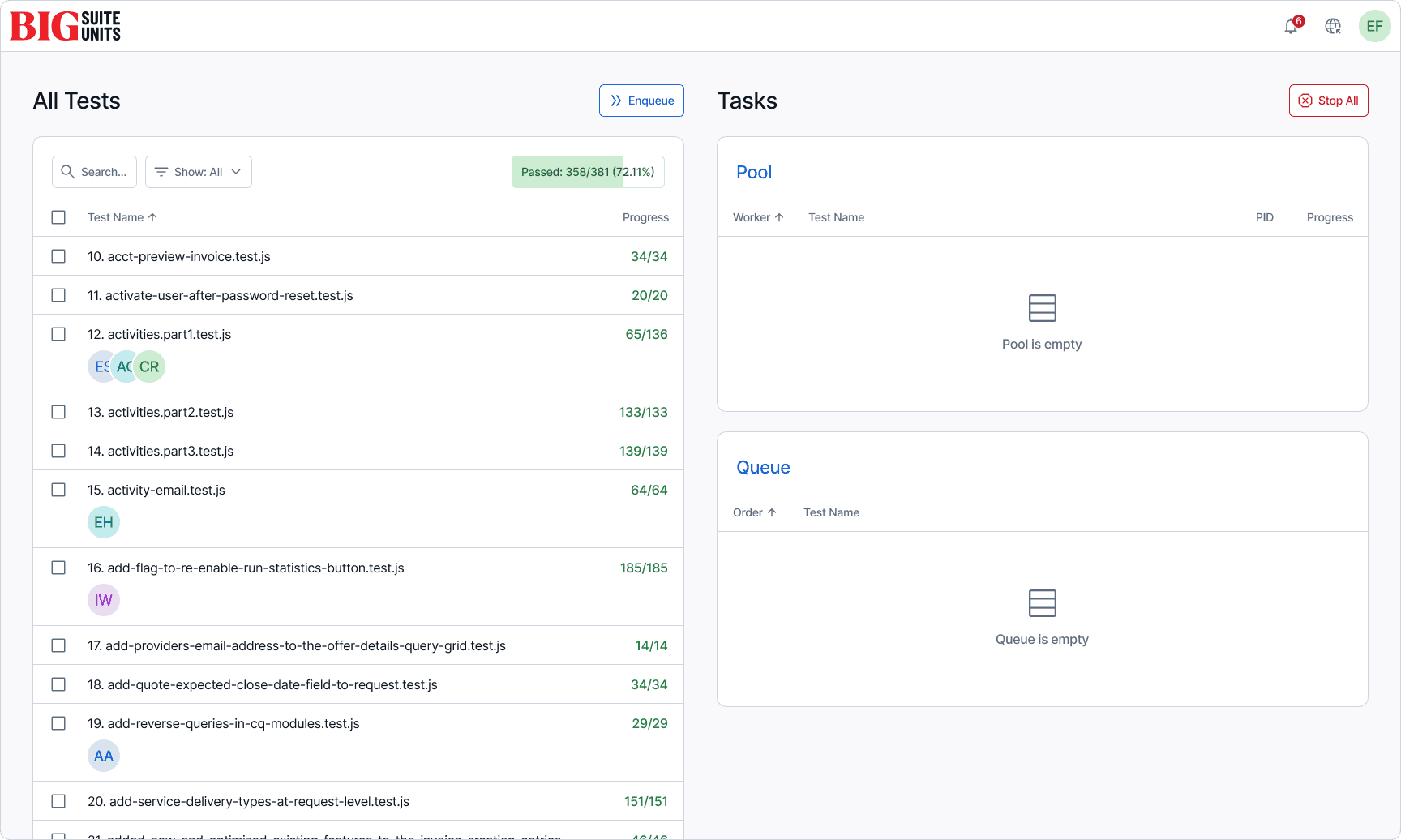
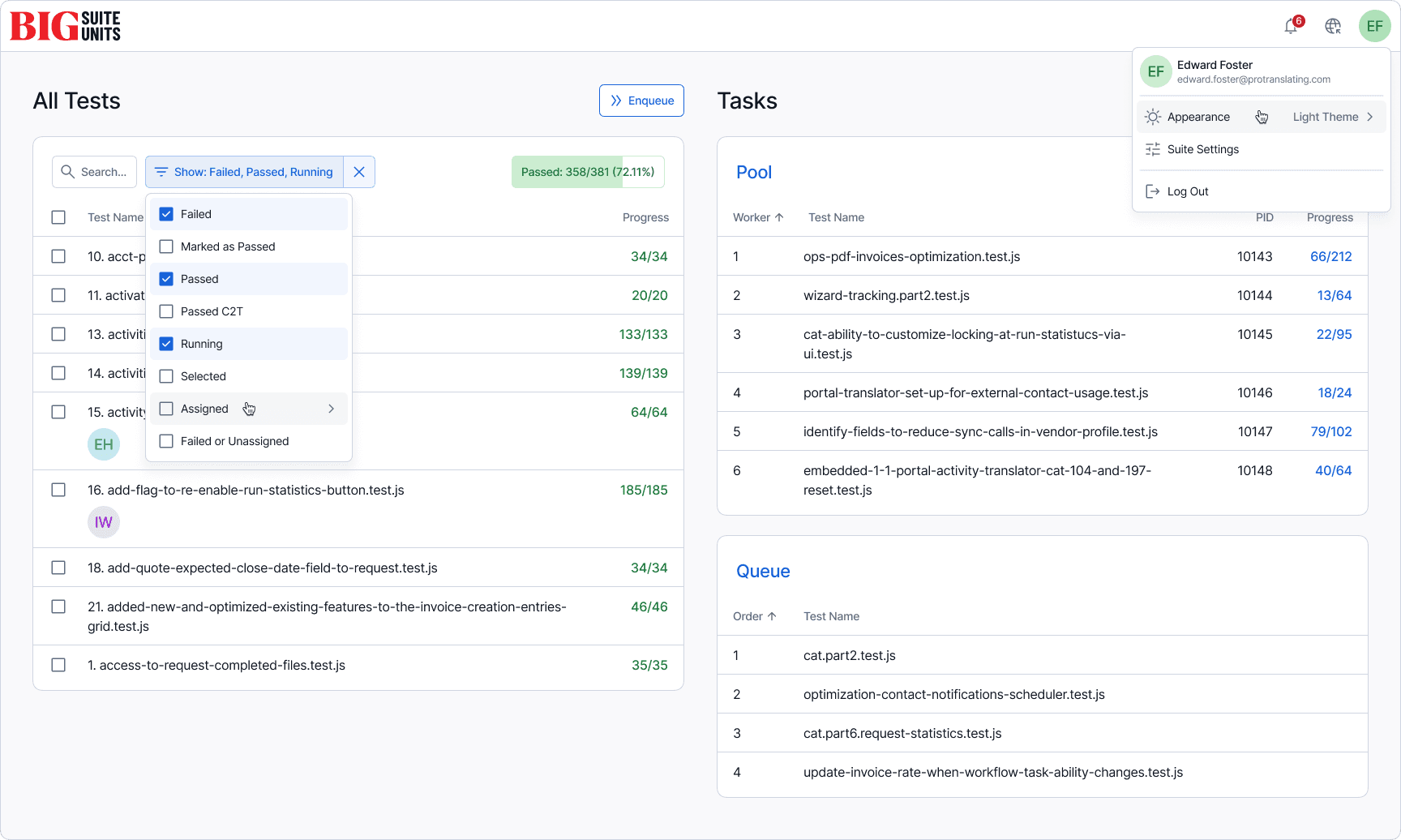
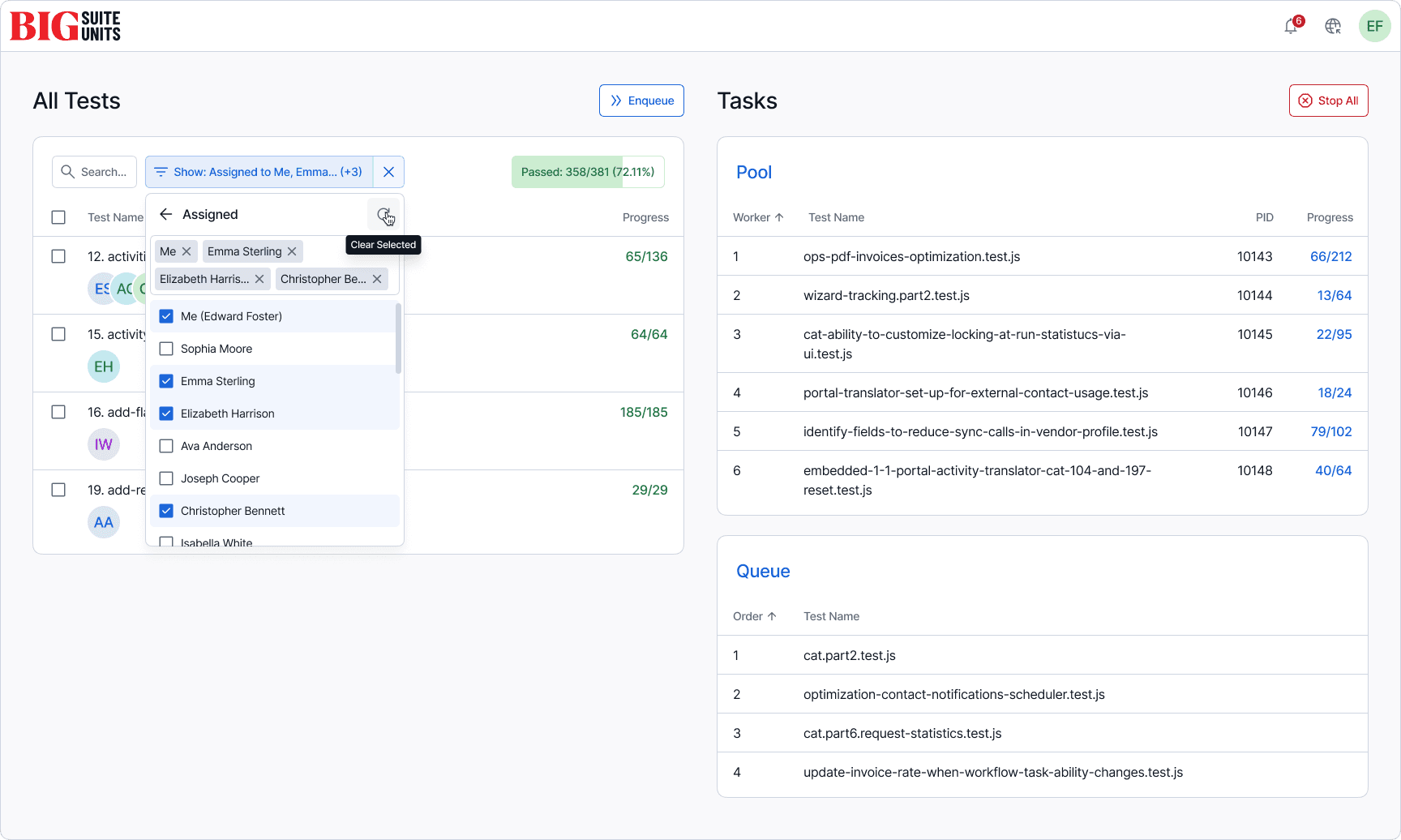
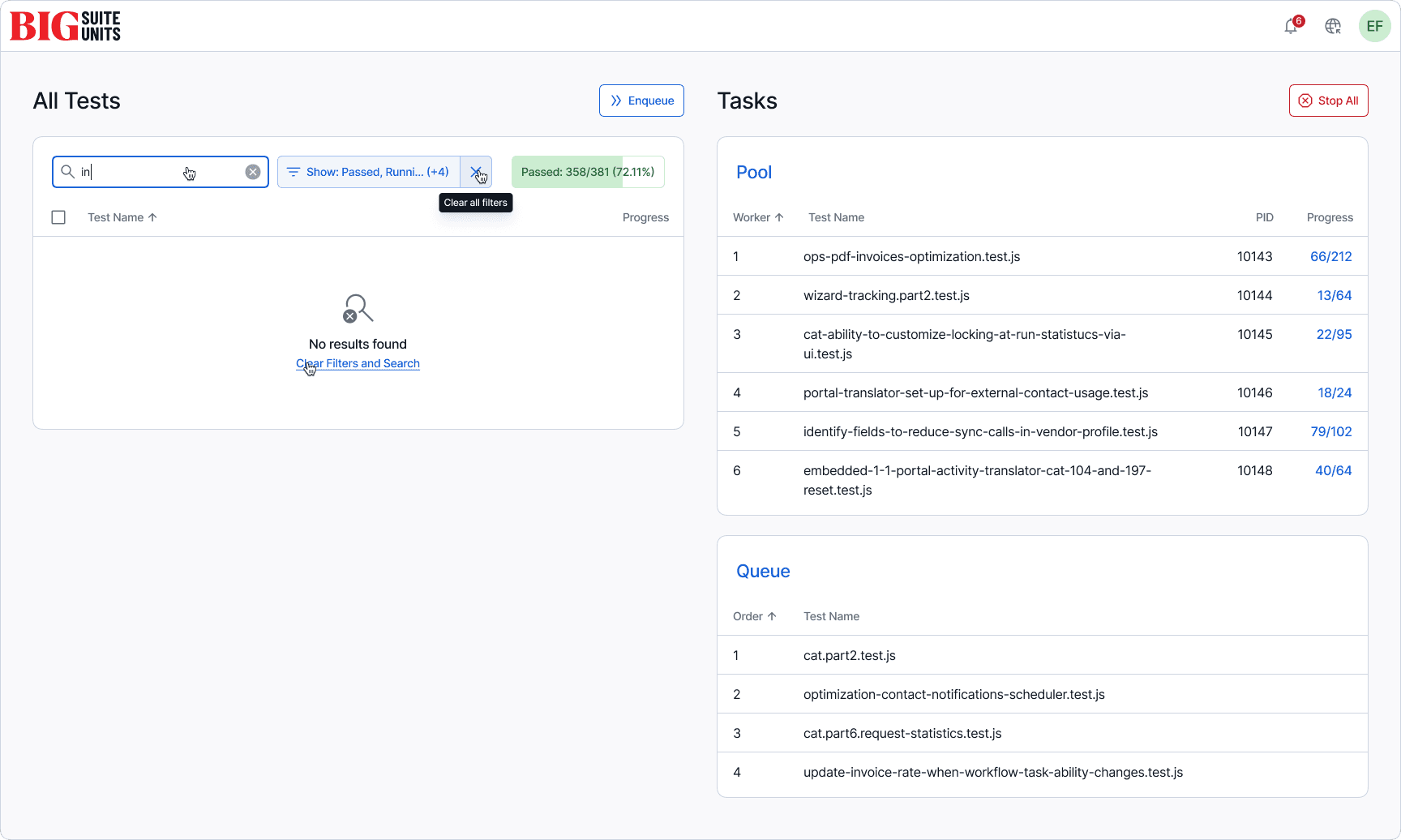
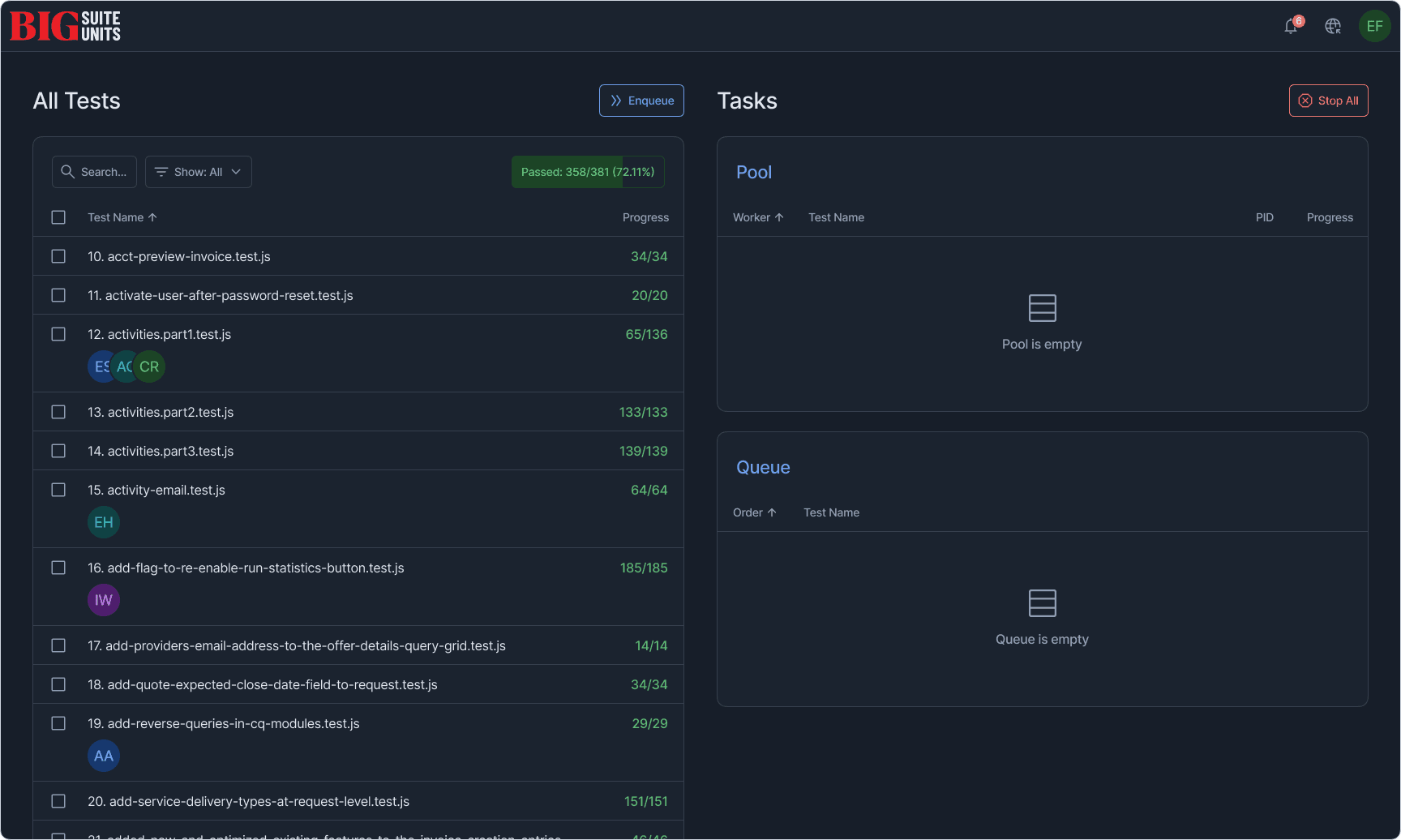
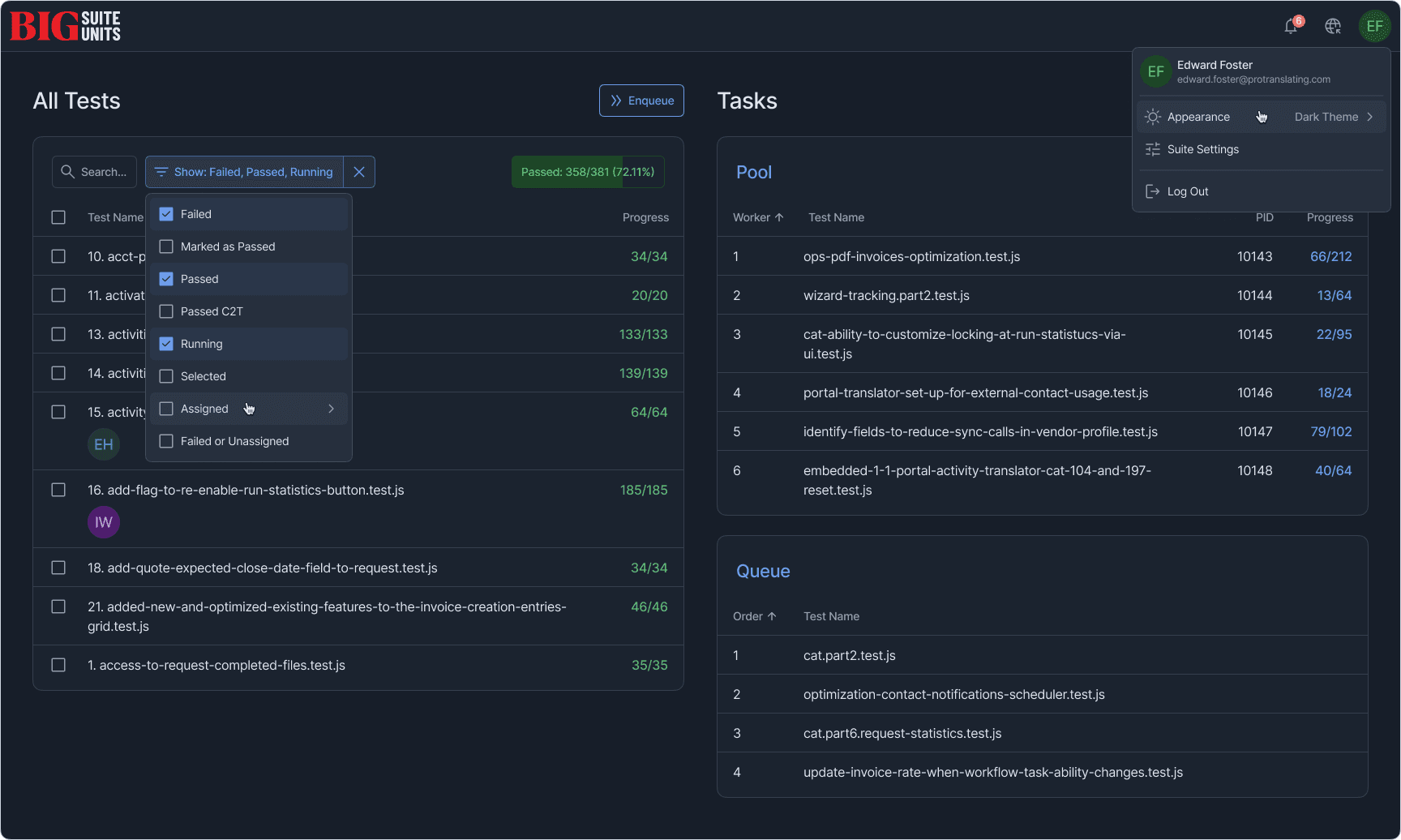
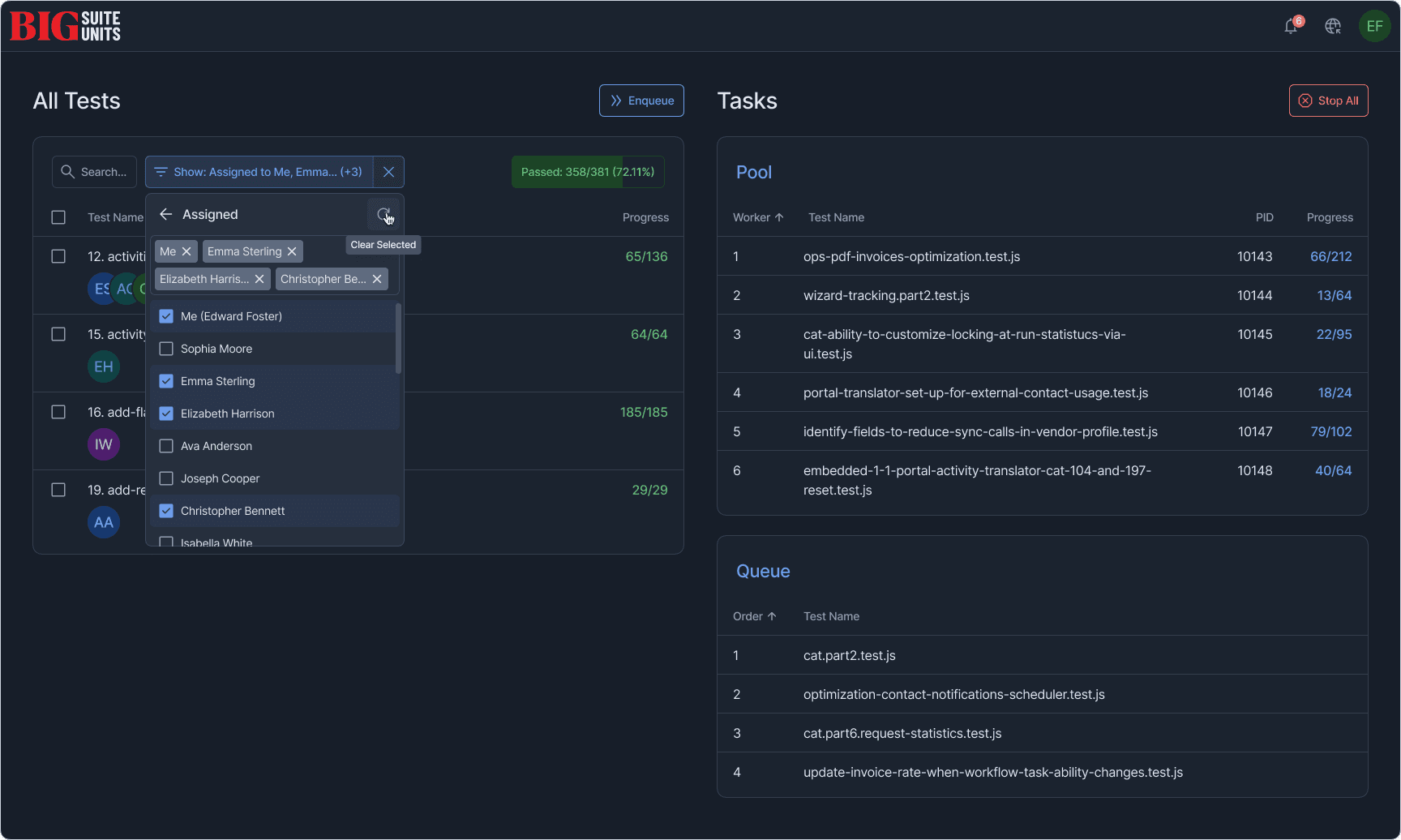
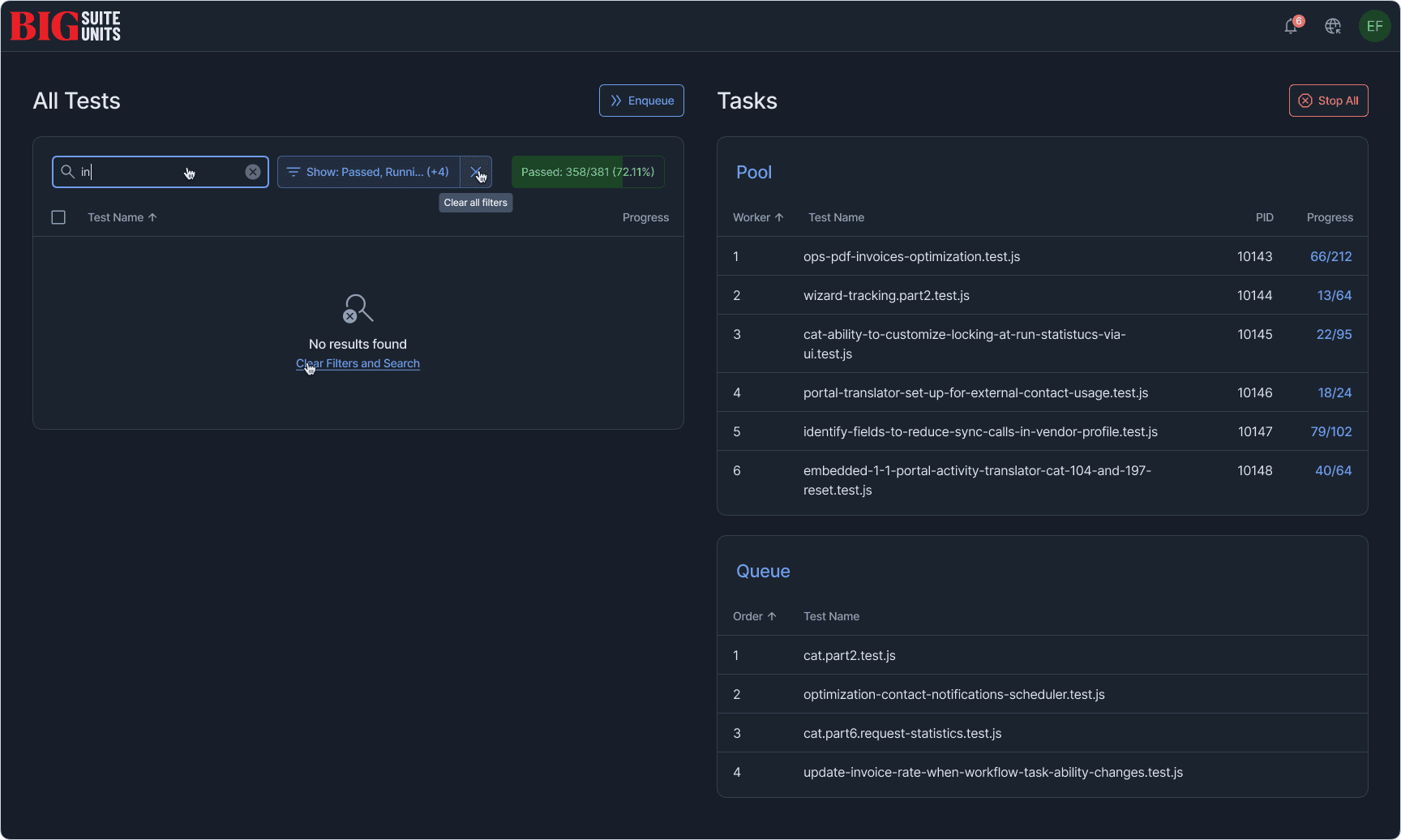
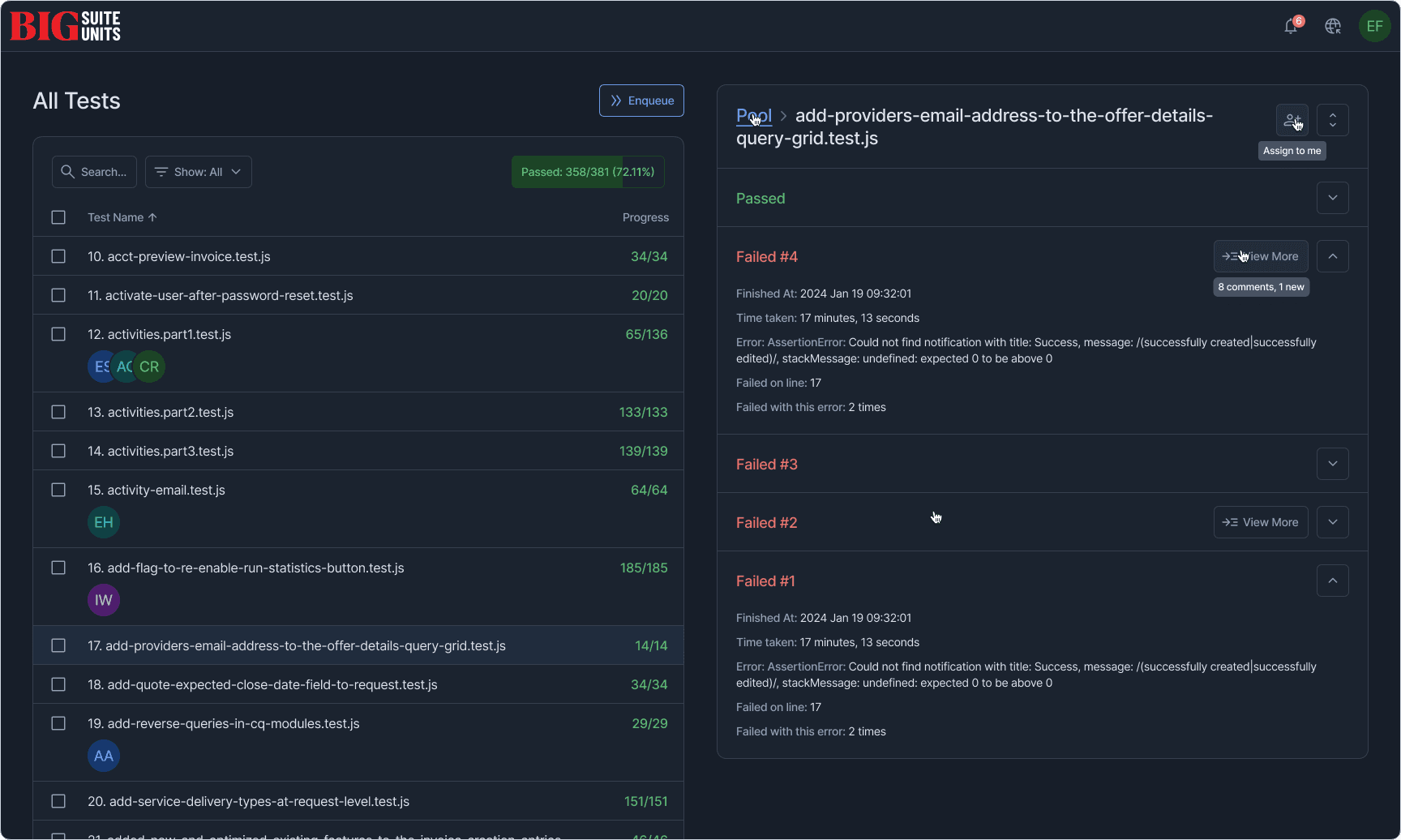
The key decision was collapsing the entire QA cycle — browse, execute, monitor, analyse, discuss — into a single split-screen view. No dashboard landing page, no navigation between sections. You open the tool and you're already in context
This matters because QA workflows are interrupt-driven. A test fails, you need to react. If the tool forces you through a funnel to reach the failure detail, it loses to a terminal window. The interface had to be faster and more informative than the raw logs it was replacing — otherwise the team would never adopt it
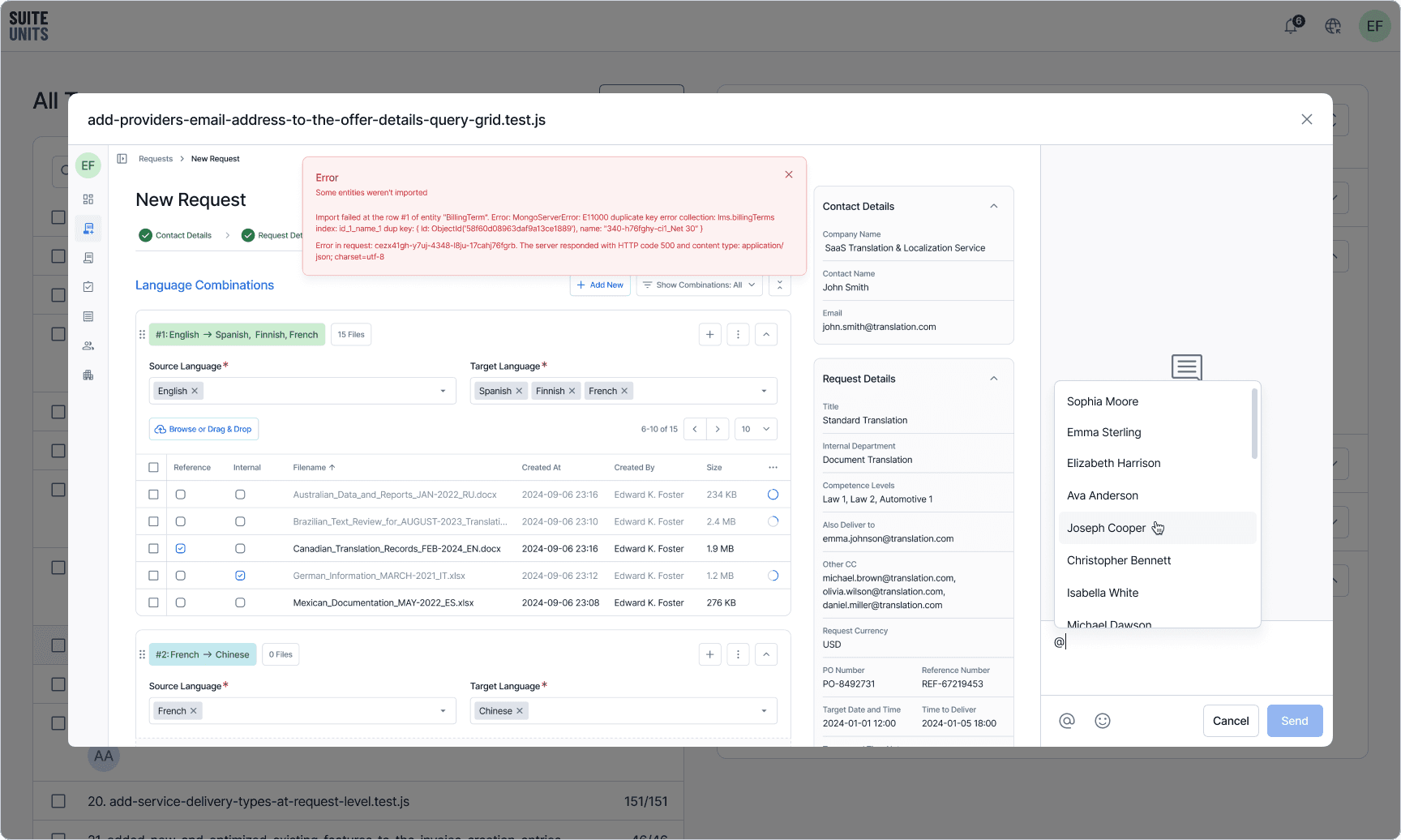
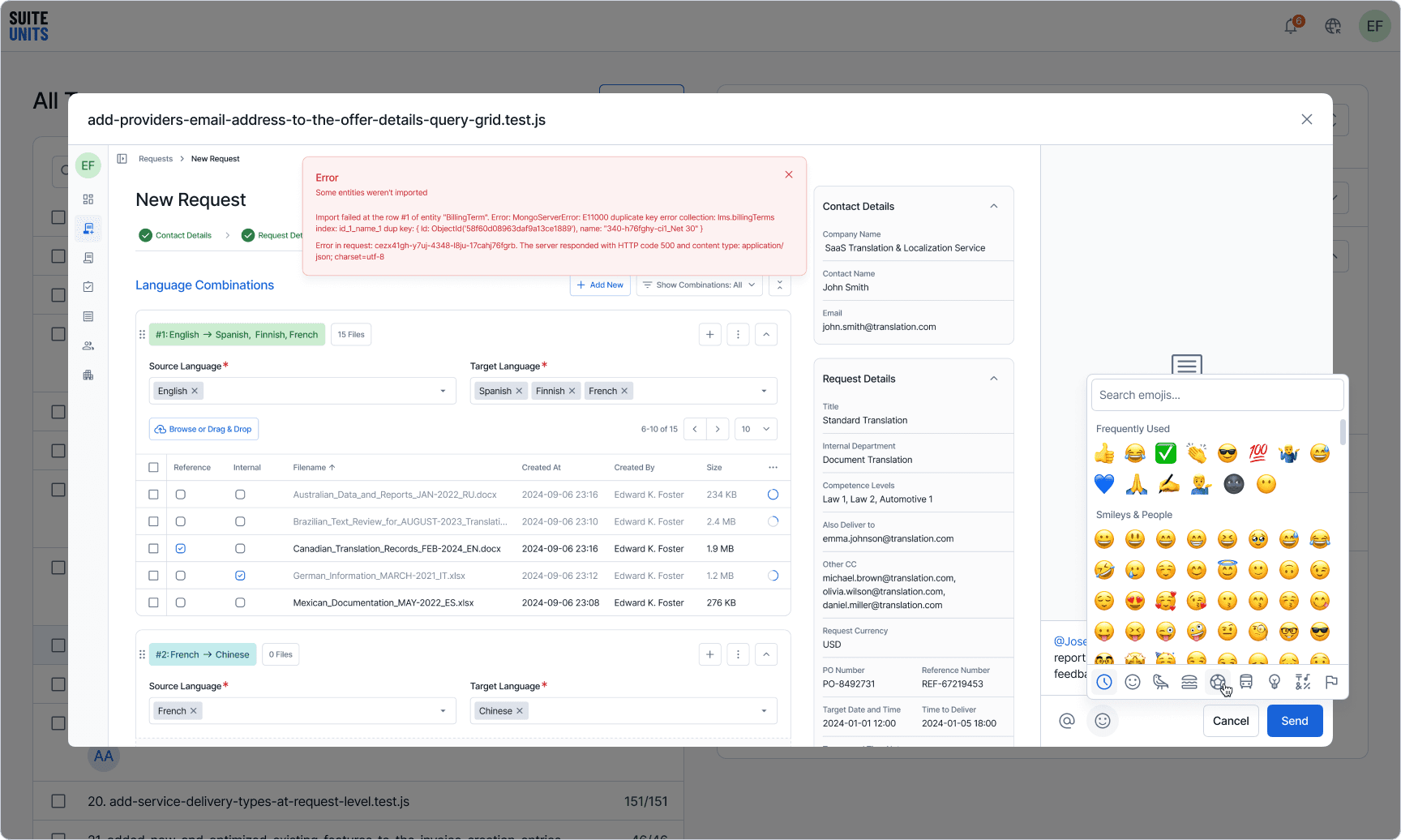
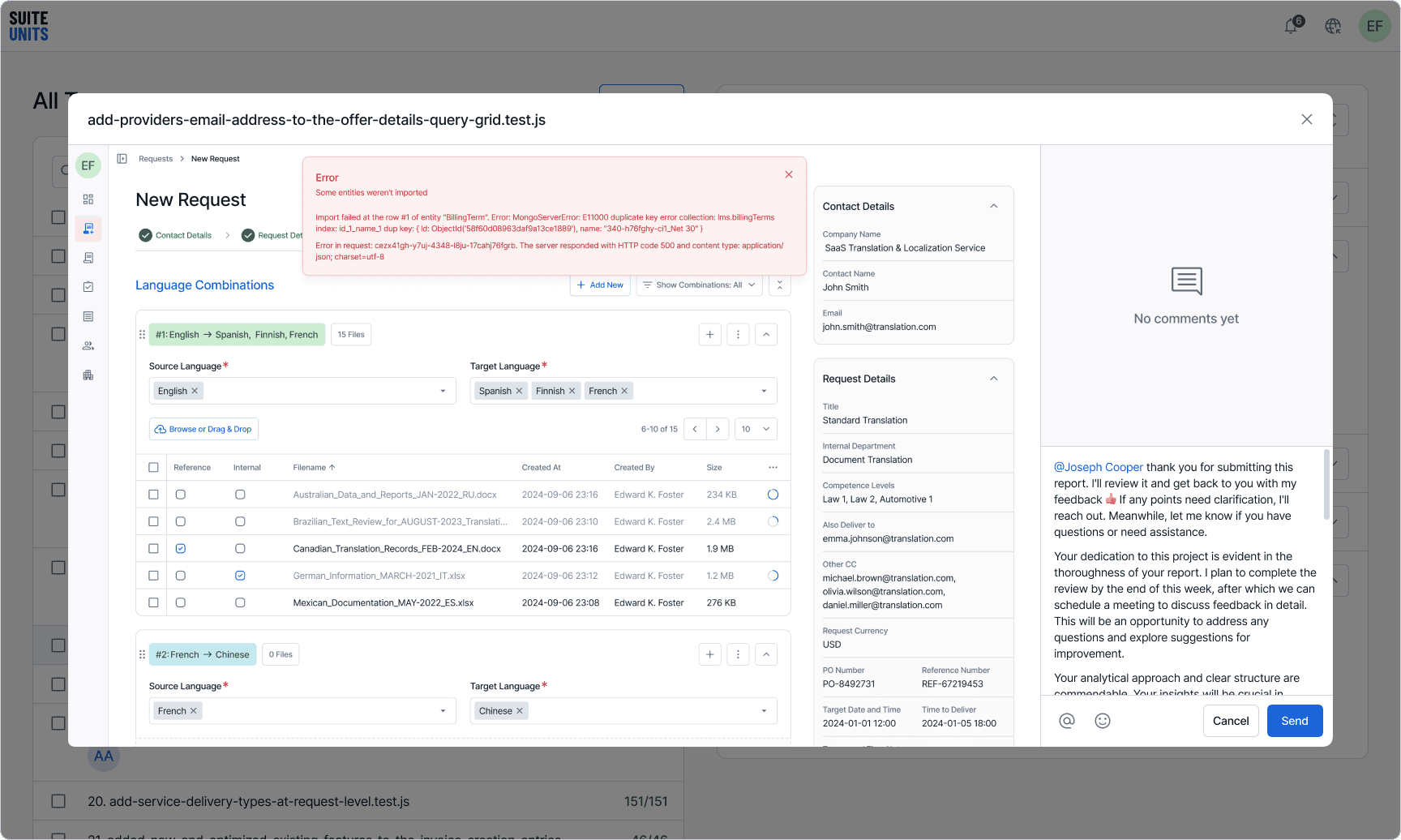
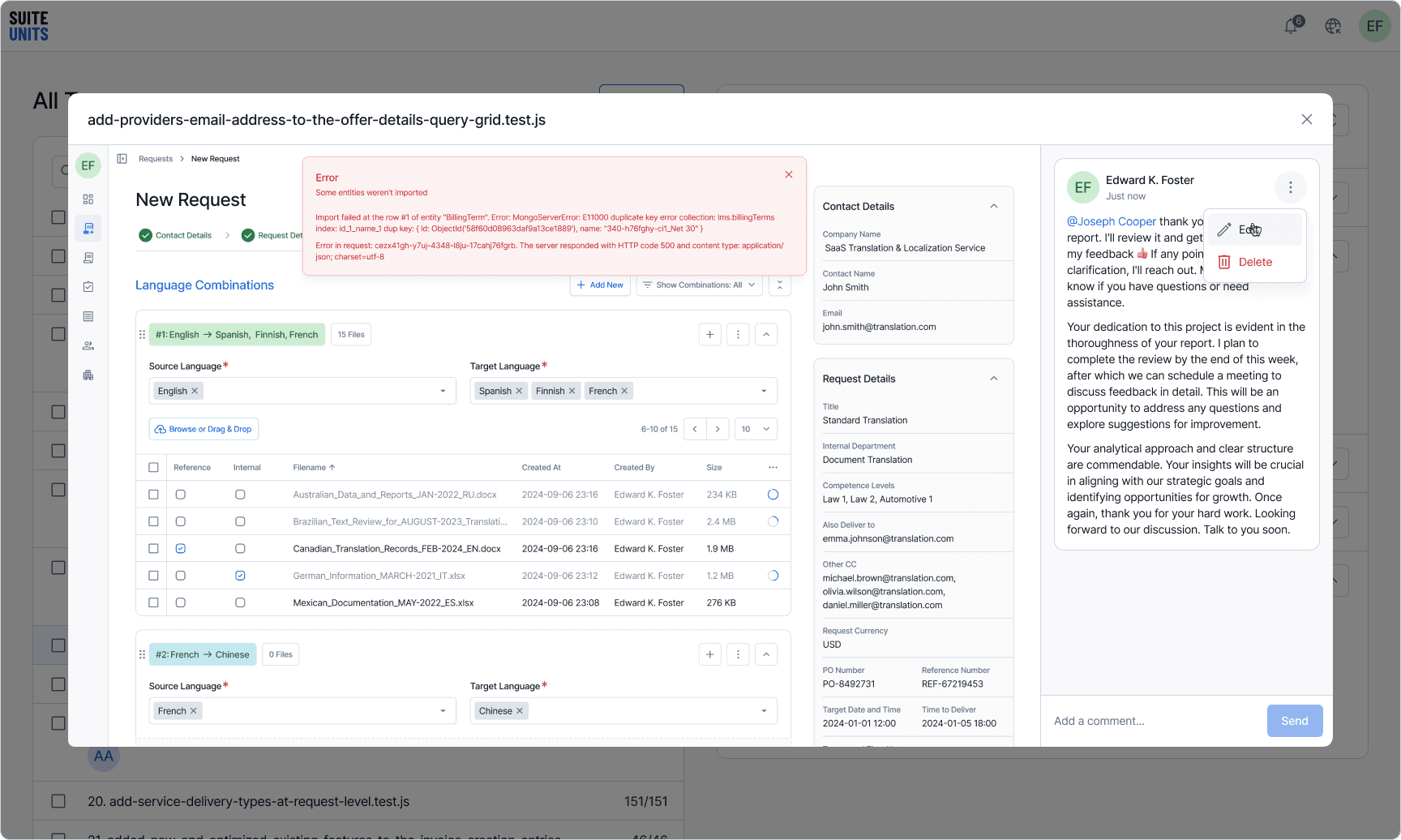
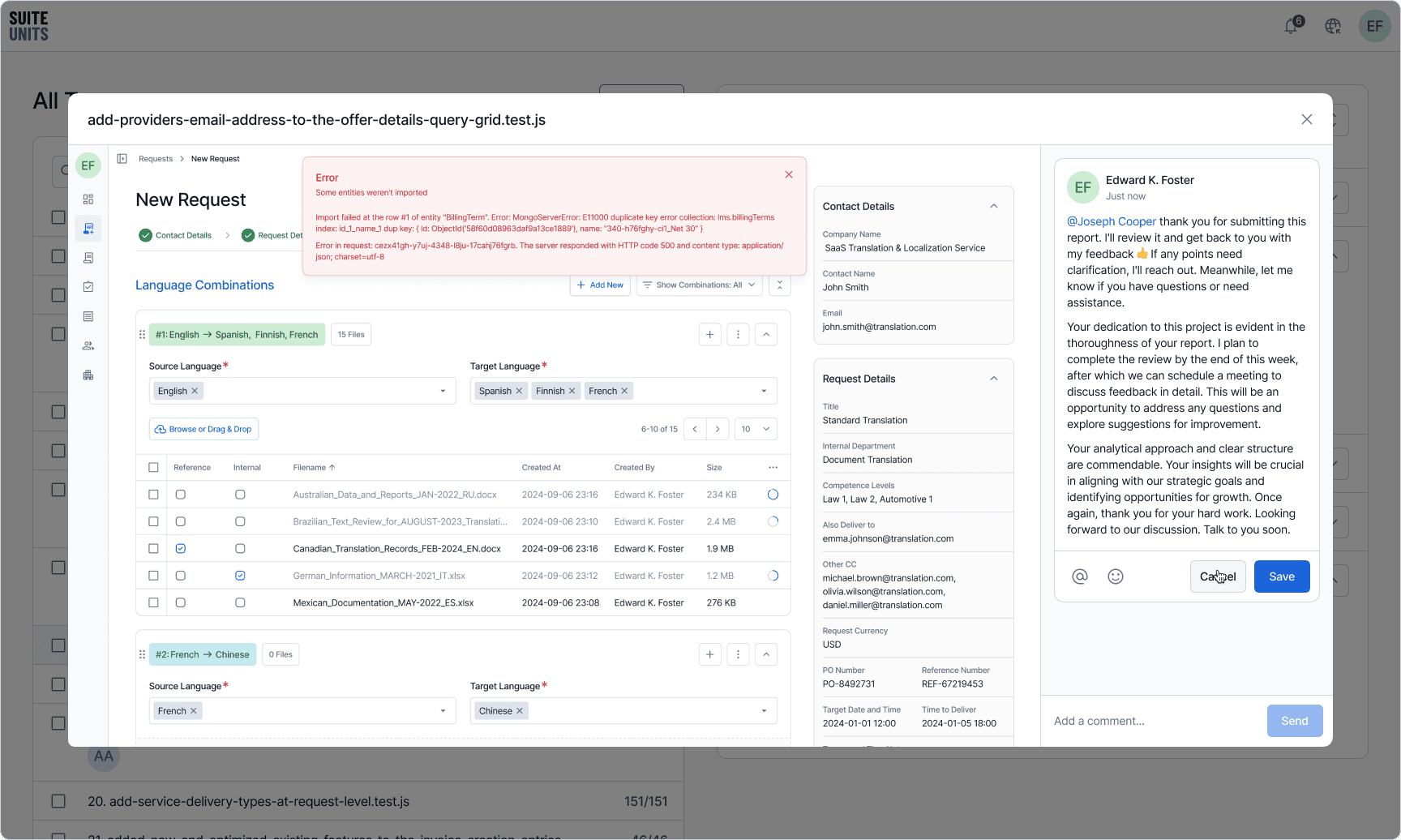
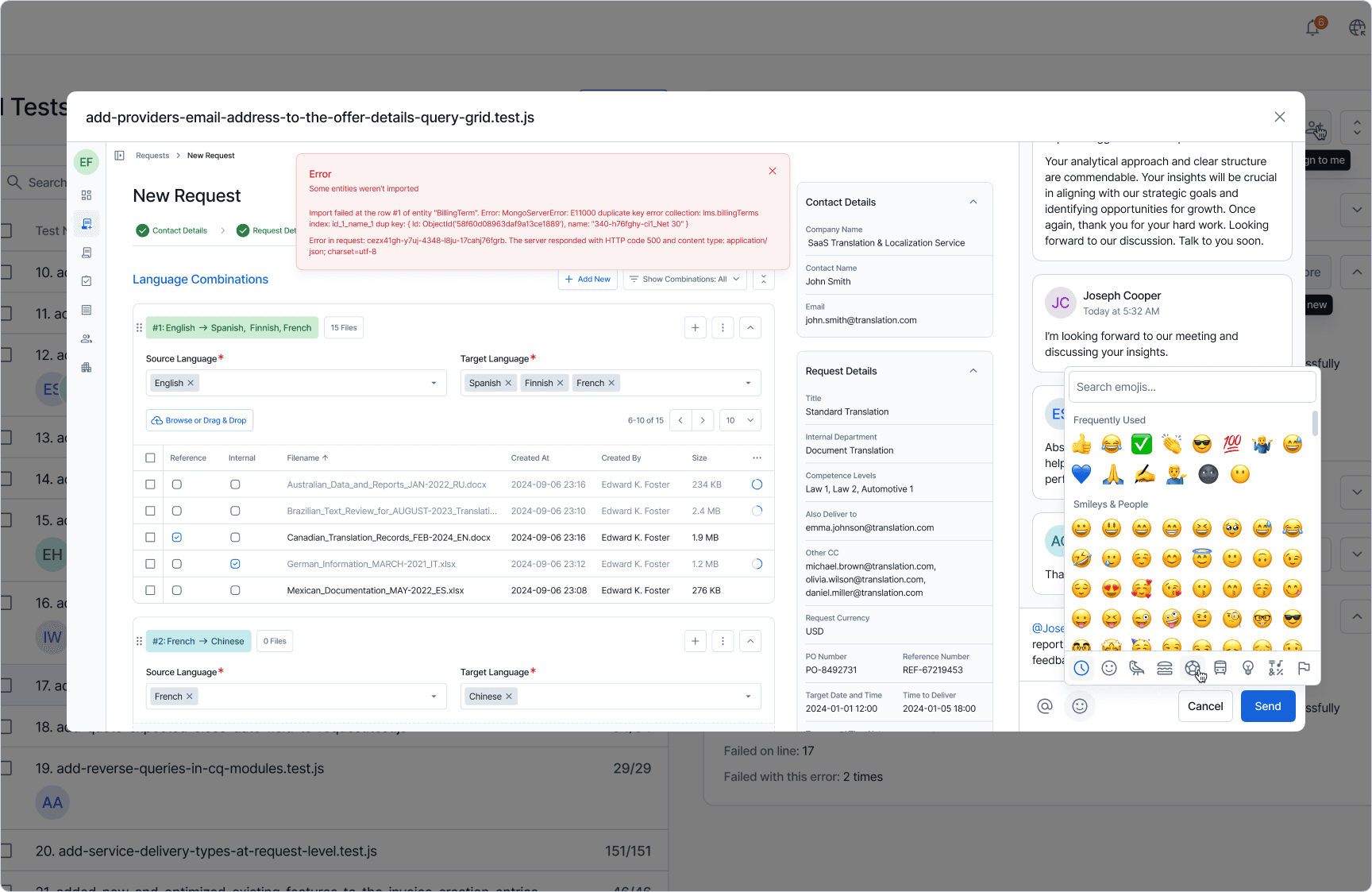
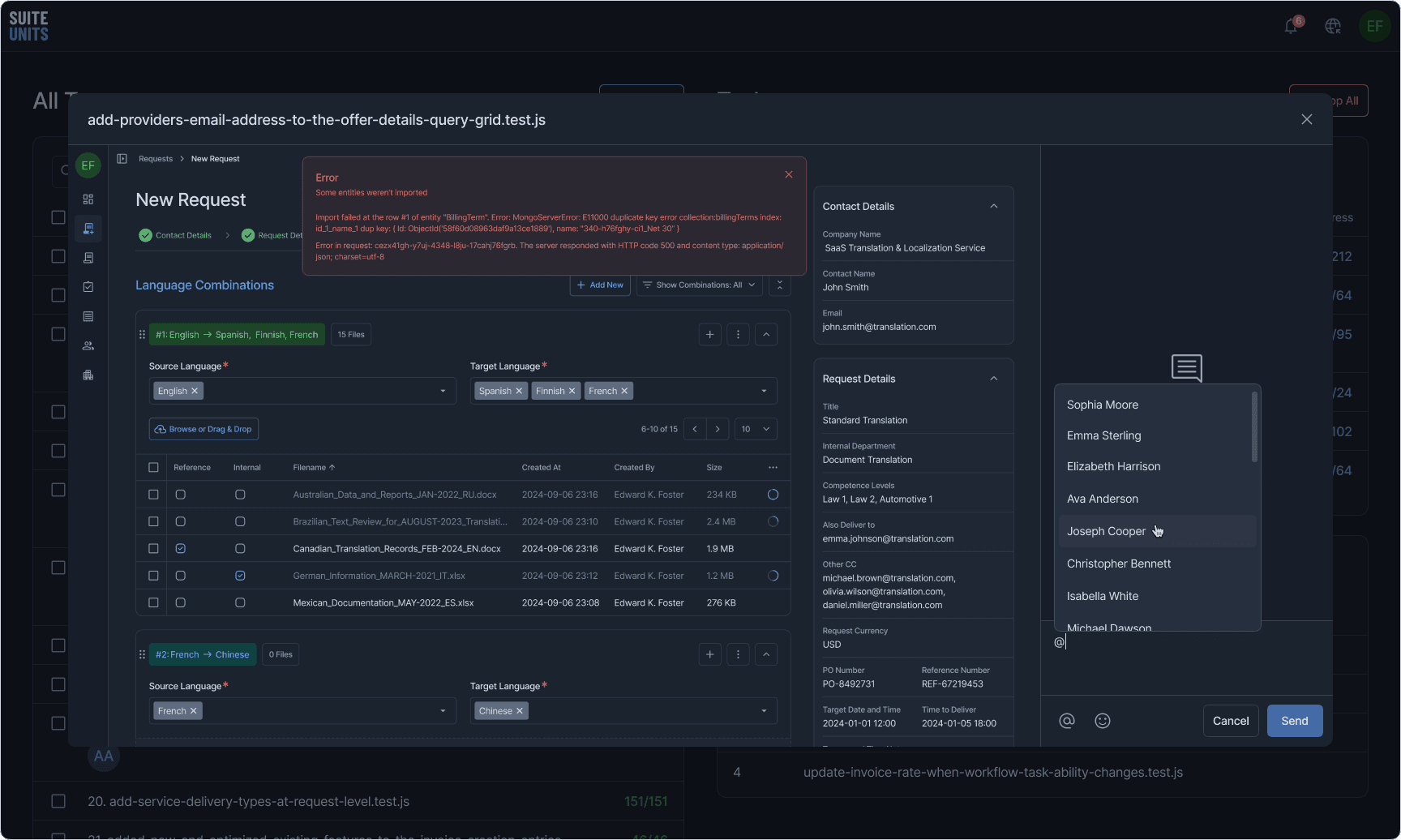
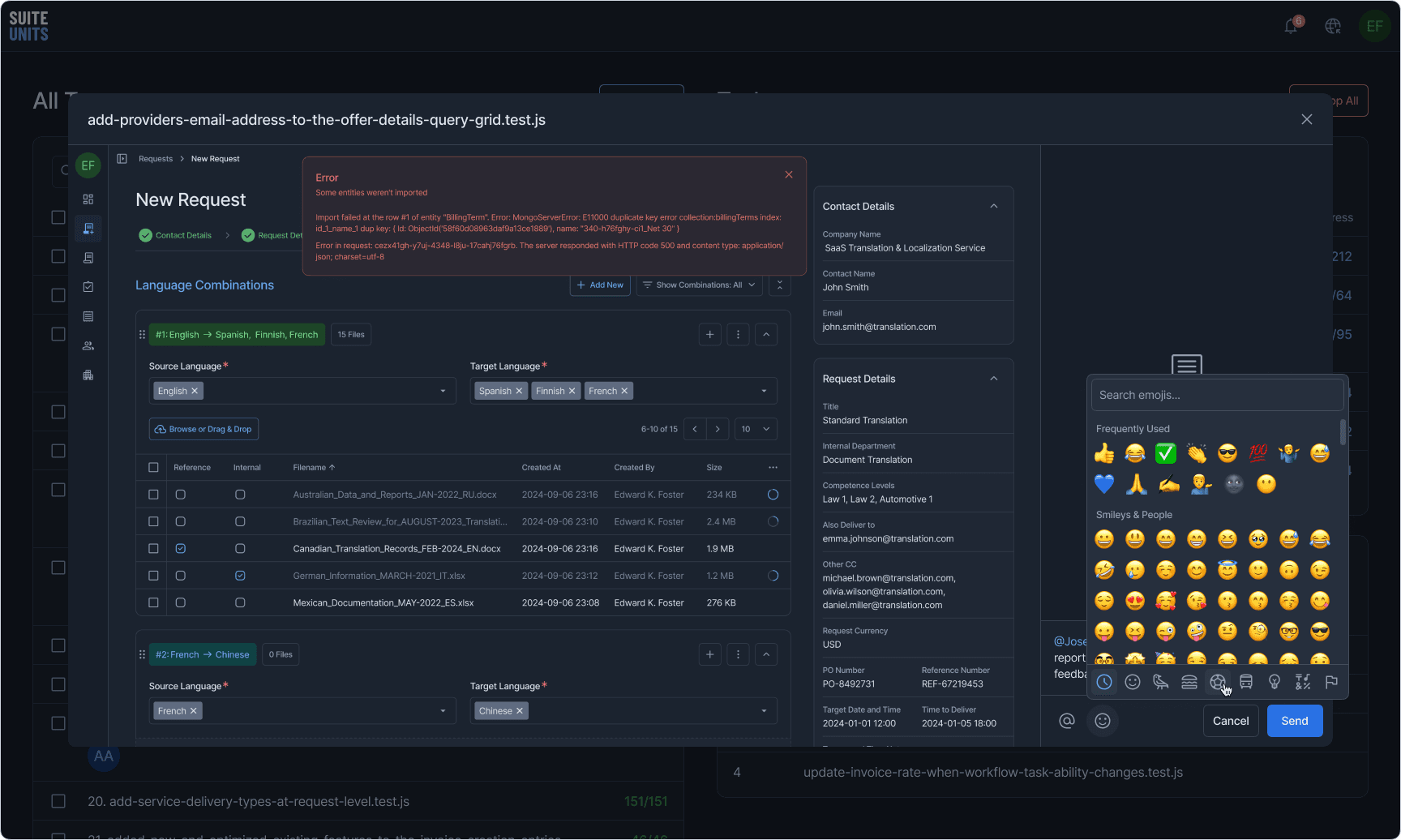
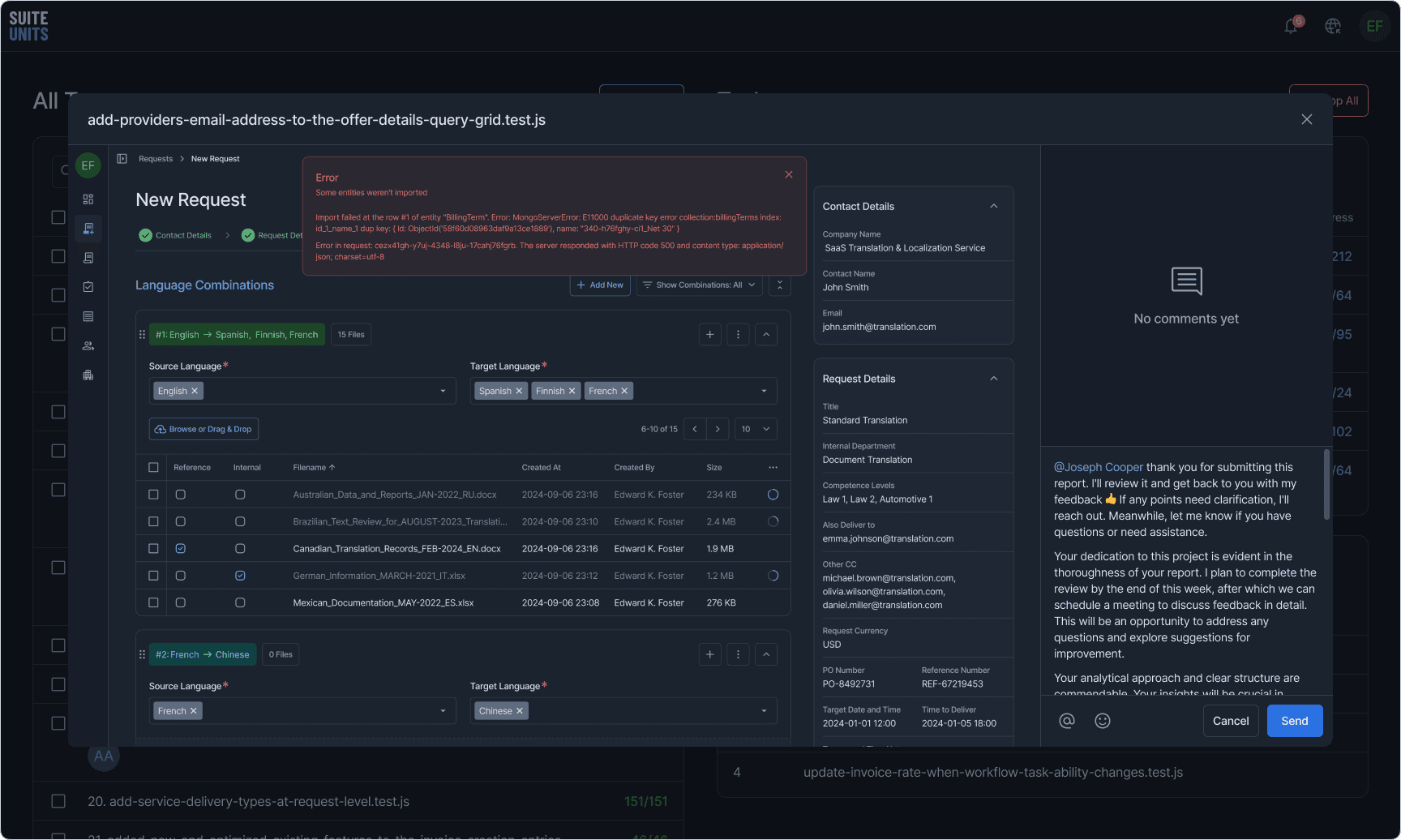
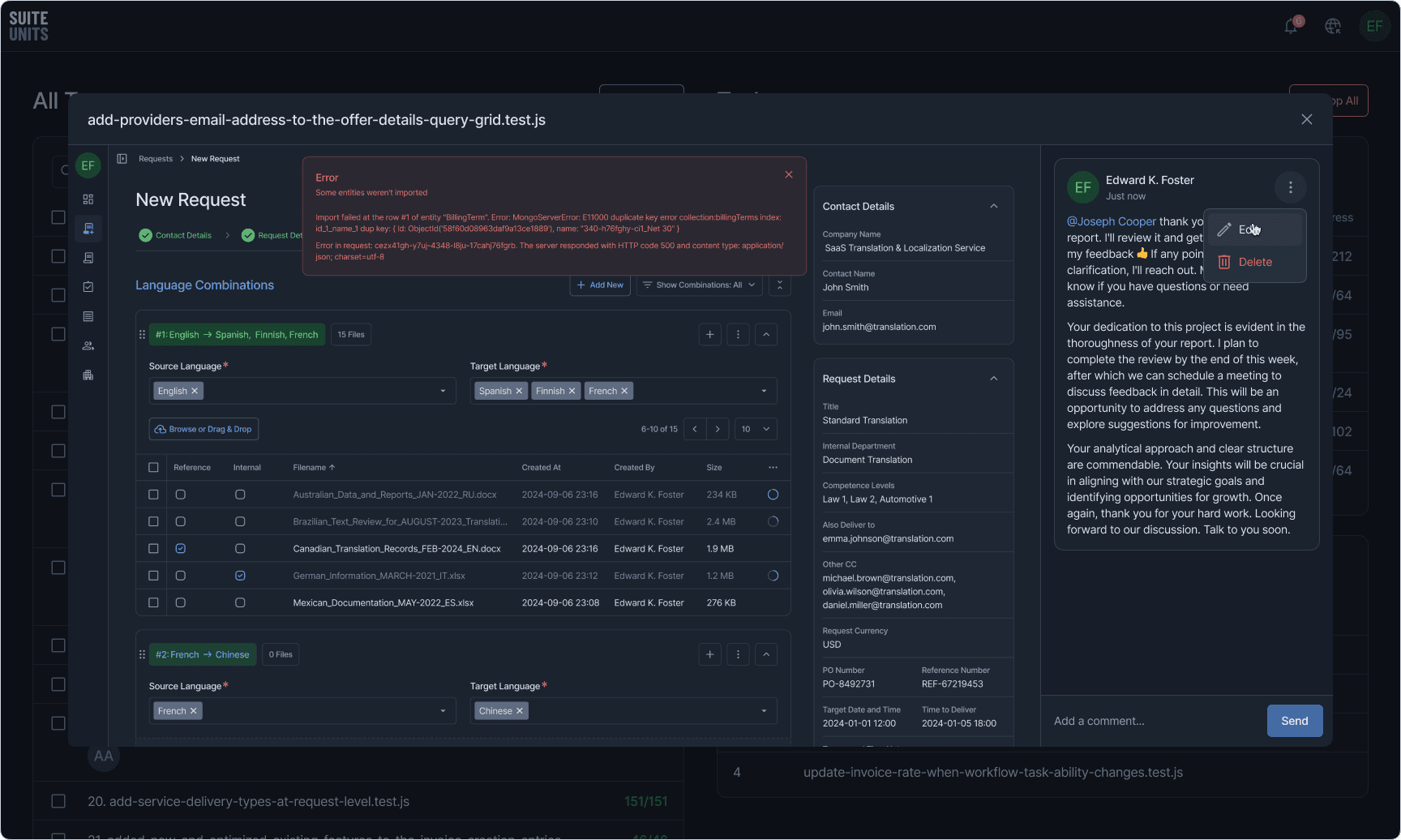
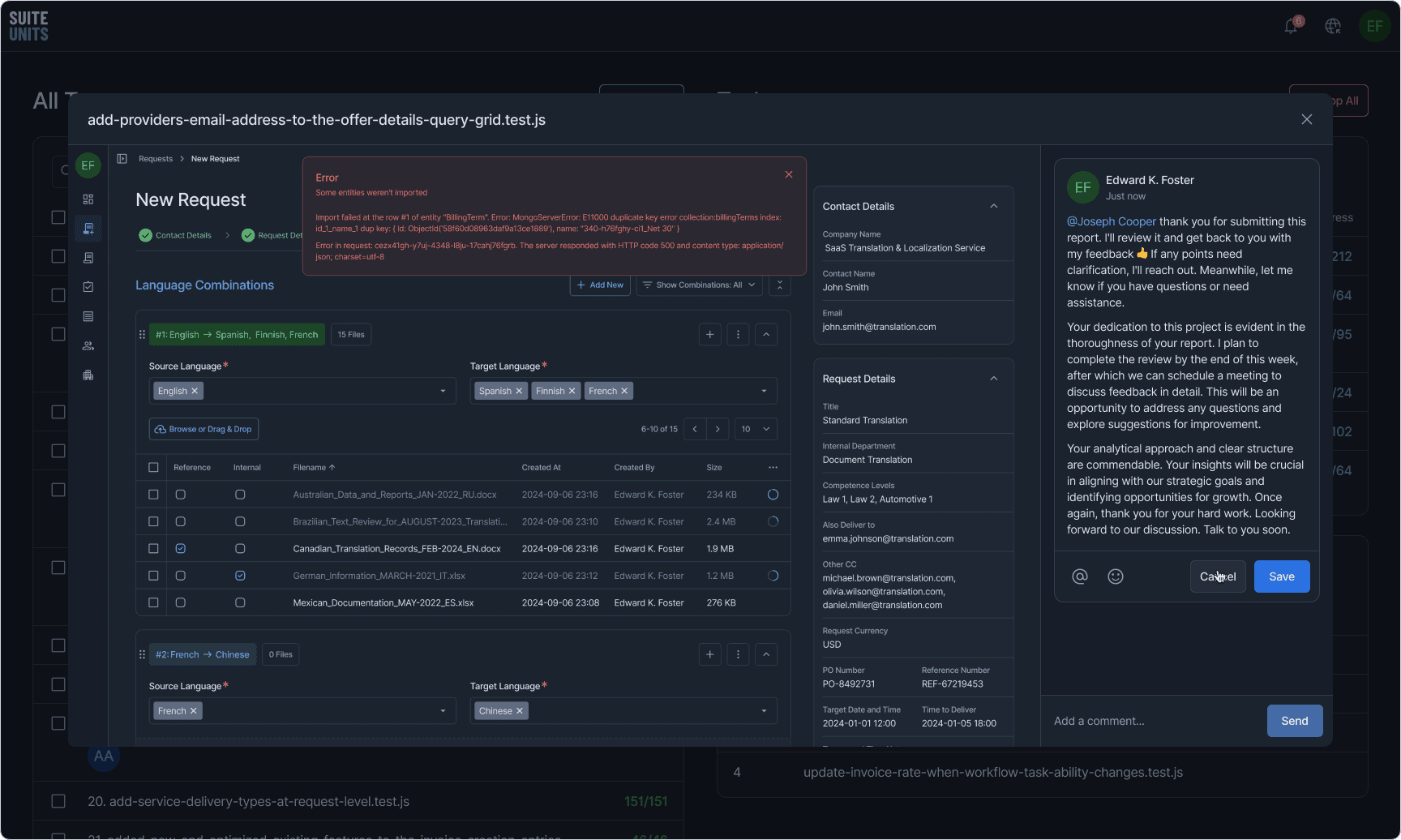
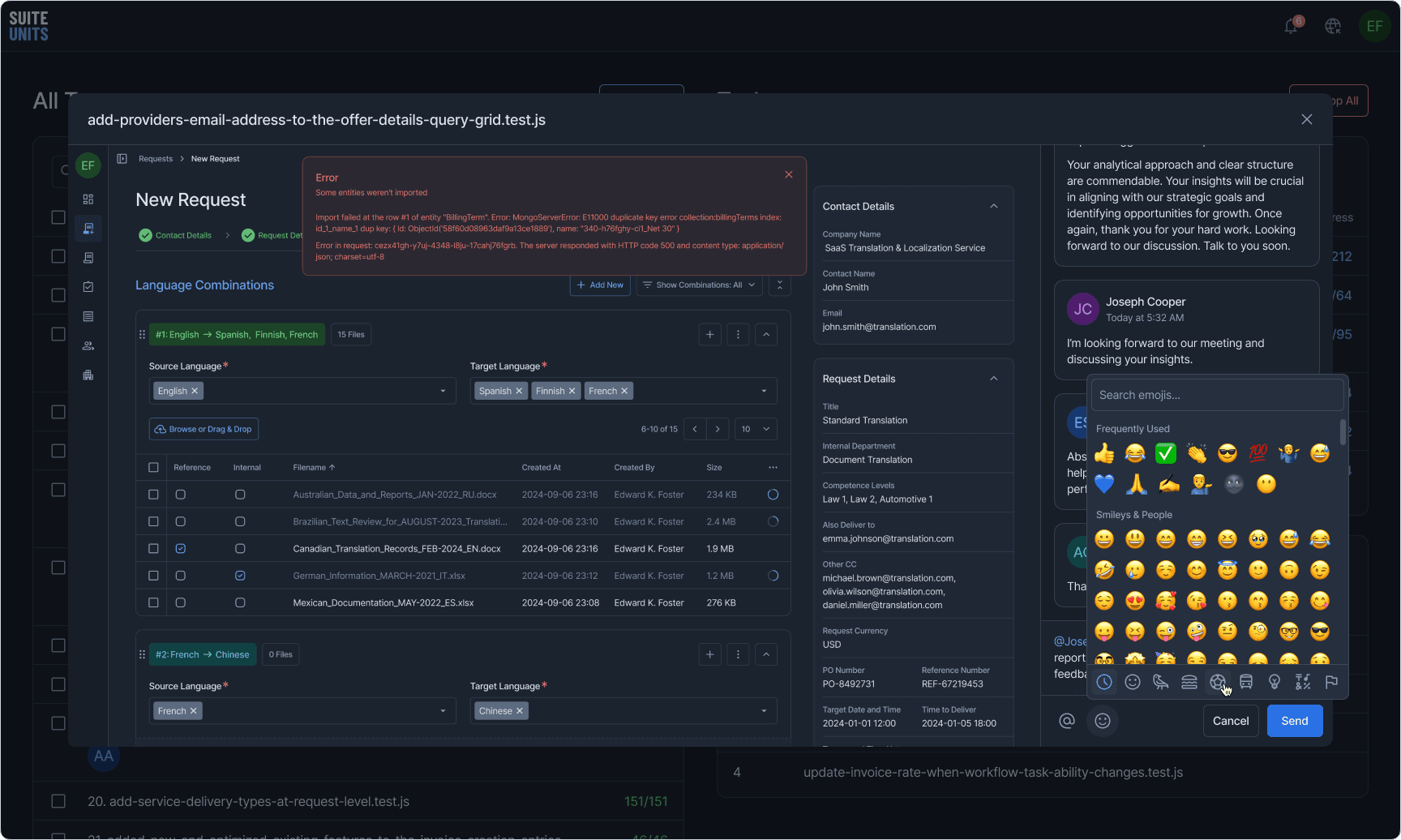
Comments with @mentions were built directly into the test detail view — a deliberate decision to keep QA discussion attached to the specific failure instead of scattered across Slack and Jira. The tool becomes the single source of truth: what failed, when, how many times, and what the team said about it
03. System & Outcome
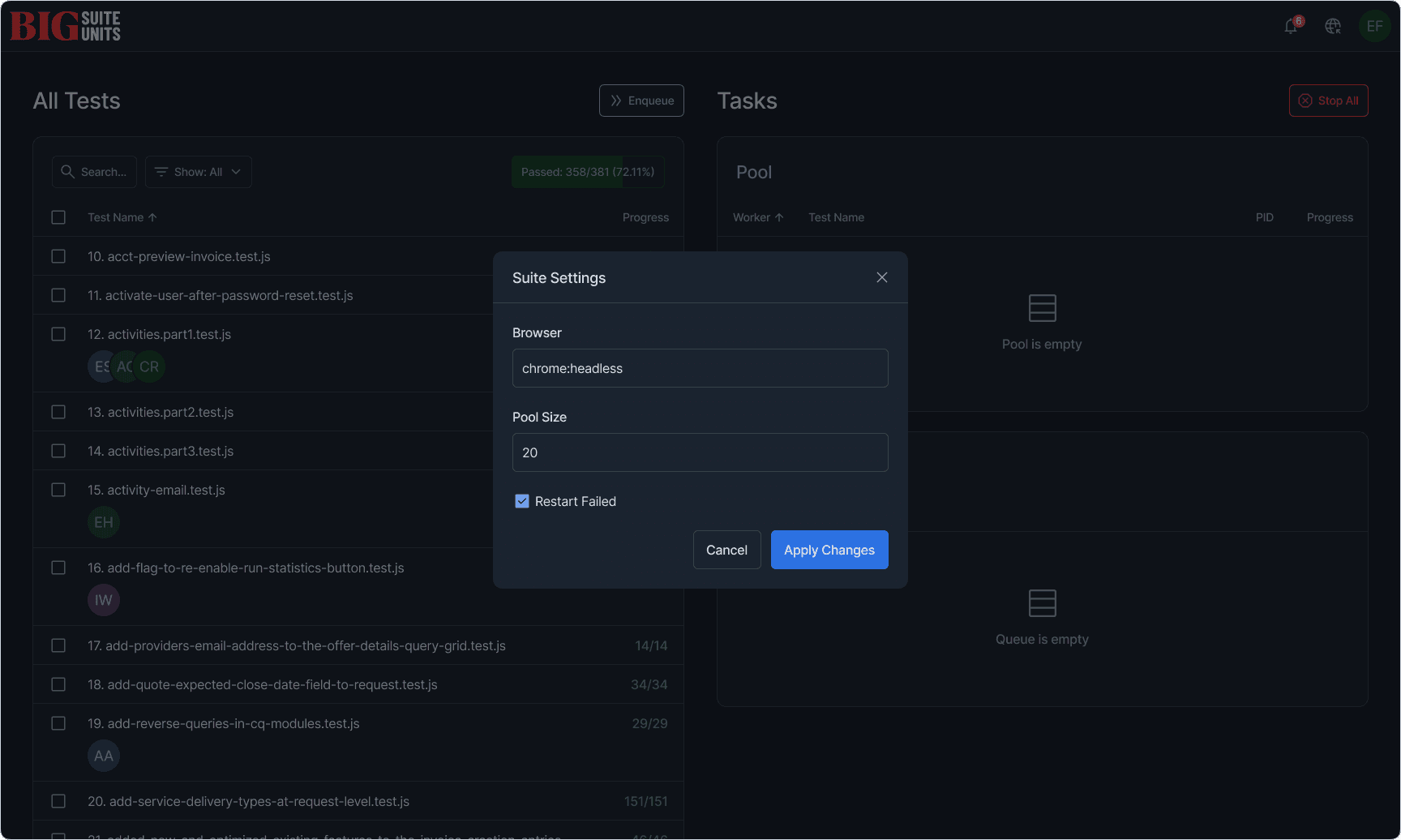
A product that went from zero to a fully functional internal tool — test management, execution monitoring, failure analysis, team collaboration, notifications, and settings. Light and dark themes, consistent component system shared with LanguageVault
The team went from interpreting test results through raw logs to having a purpose-built interface where running, reviewing, and discussing tests happens in one place
01. Product Context & Constraint
Suite Units is an internal testing platform for QA teams running large automated test suites. Before this product existed, there was no interface — just raw developer tooling. The brief: design a full product from scratch based on developer specifications and direct interviews with the team
The core constraint was speed of interpretation. QA engineers run hundreds of tests and need to know immediately what failed, why, and who's looking into it. Every extra click between "something broke" and "I understand the problem" is wasted time
Read All
01. Product Context & Constraint
Suite Units is an internal testing platform for QA teams running large automated test suites. Before this product existed, there was no interface — just raw developer tooling. The brief: design a full product from scratch based on developer specifications and direct interviews with the team
The core constraint was speed of interpretation. QA engineers run hundreds of tests and need to know immediately what failed, why, and who's looking into it. Every extra click between "something broke" and "I understand the problem" is wasted time
02. Design Approach
The key decision was collapsing the entire QA cycle — browse, execute, monitor, analyse, discuss — into a single split-screen view. No dashboard landing page, no navigation between sections. You open the tool and you're already in context
This matters because QA workflows are interrupt-driven. A test fails, you need to react. If the tool forces you through a funnel to reach the failure detail, it loses to a terminal window. The interface had to be faster and more informative than the raw logs it was replacing — otherwise the team would never adopt it
Comments with @mentions were built directly into the test detail view — a deliberate decision to keep QA discussion attached to the specific failure instead of scattered across Slack and Jira. The tool becomes the single source of truth: what failed, when, how many times, and what the team said about it
03. System & Outcome
A product that went from zero to a fully functional internal tool — test management, execution monitoring, failure analysis, team collaboration, notifications, and settings. Light and dark themes, consistent component system shared with LanguageVault
The team went from interpreting test results through raw logs to having a purpose-built interface where running, reviewing, and discussing tests happens in one place
01. Product Context & Constraint
Suite Units is an internal testing platform for QA teams running large automated test suites. Before this product existed, there was no interface — just raw developer tooling. The brief: design a full product from scratch based on developer specifications and direct interviews with the team
The core constraint was speed of interpretation. QA engineers run hundreds of tests and need to know immediately what failed, why, and who's looking into it. Every extra click between "something broke" and "I understand the problem" is wasted time
Read All
No items
Test Suite View

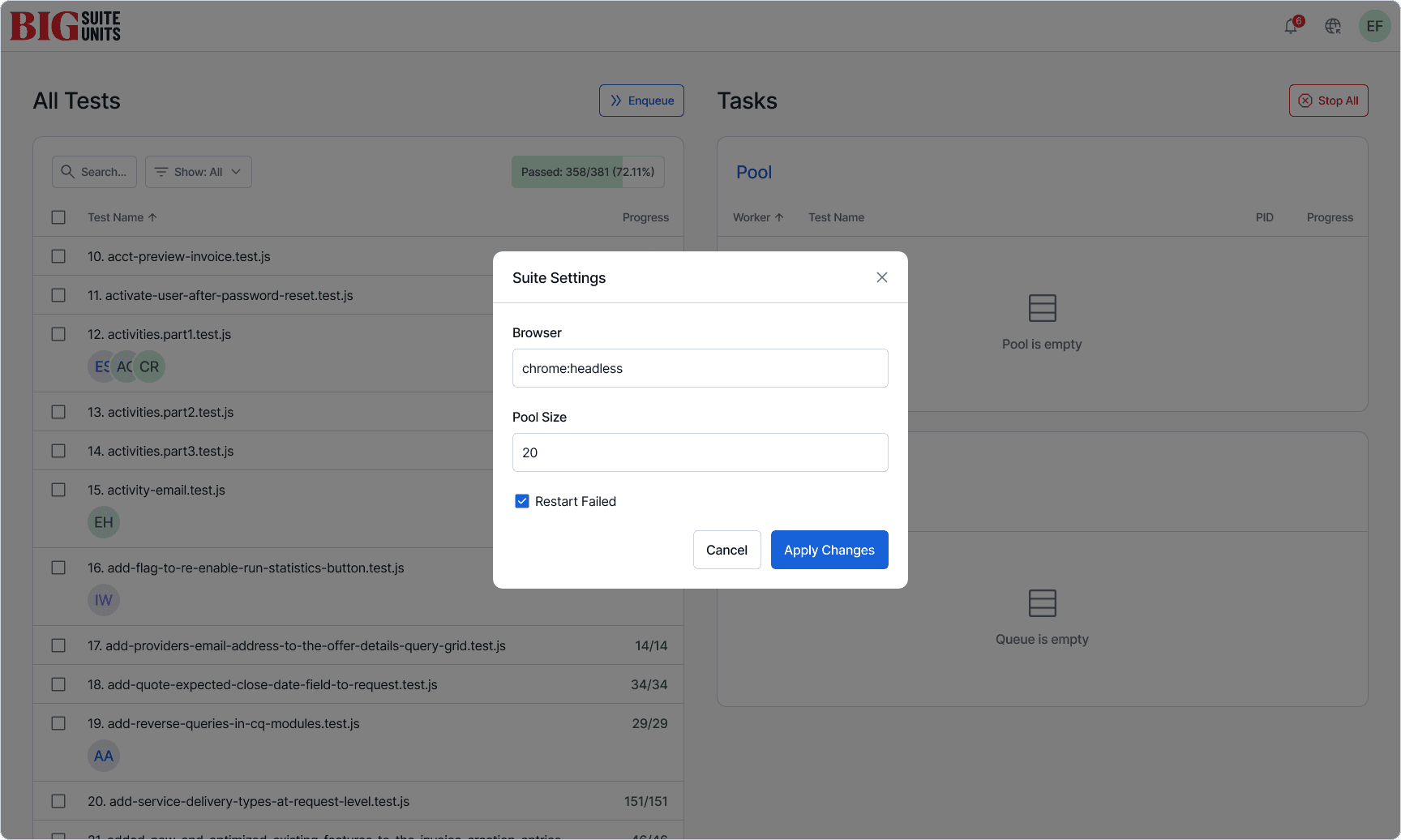
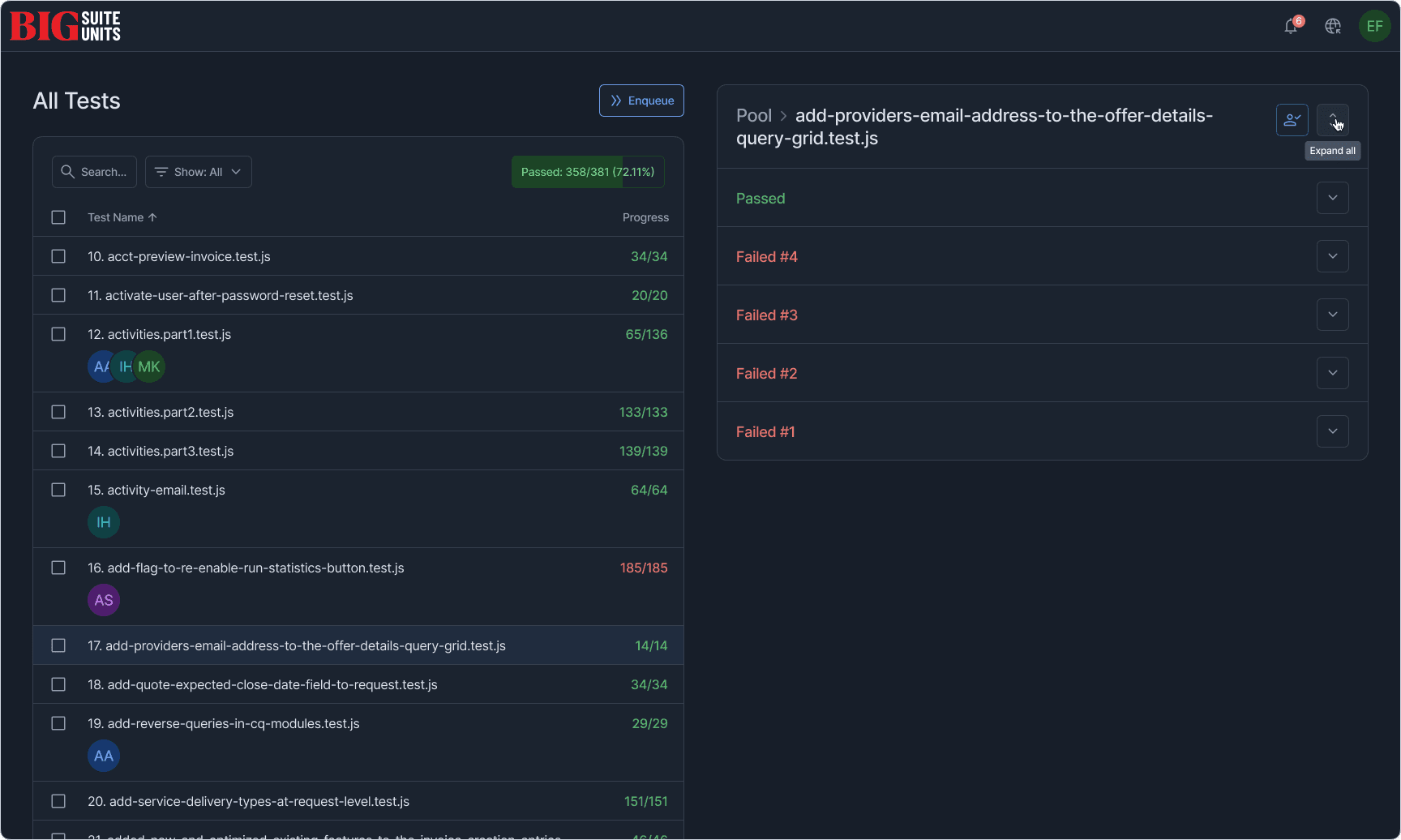
Test Suite View -> Pool Detail
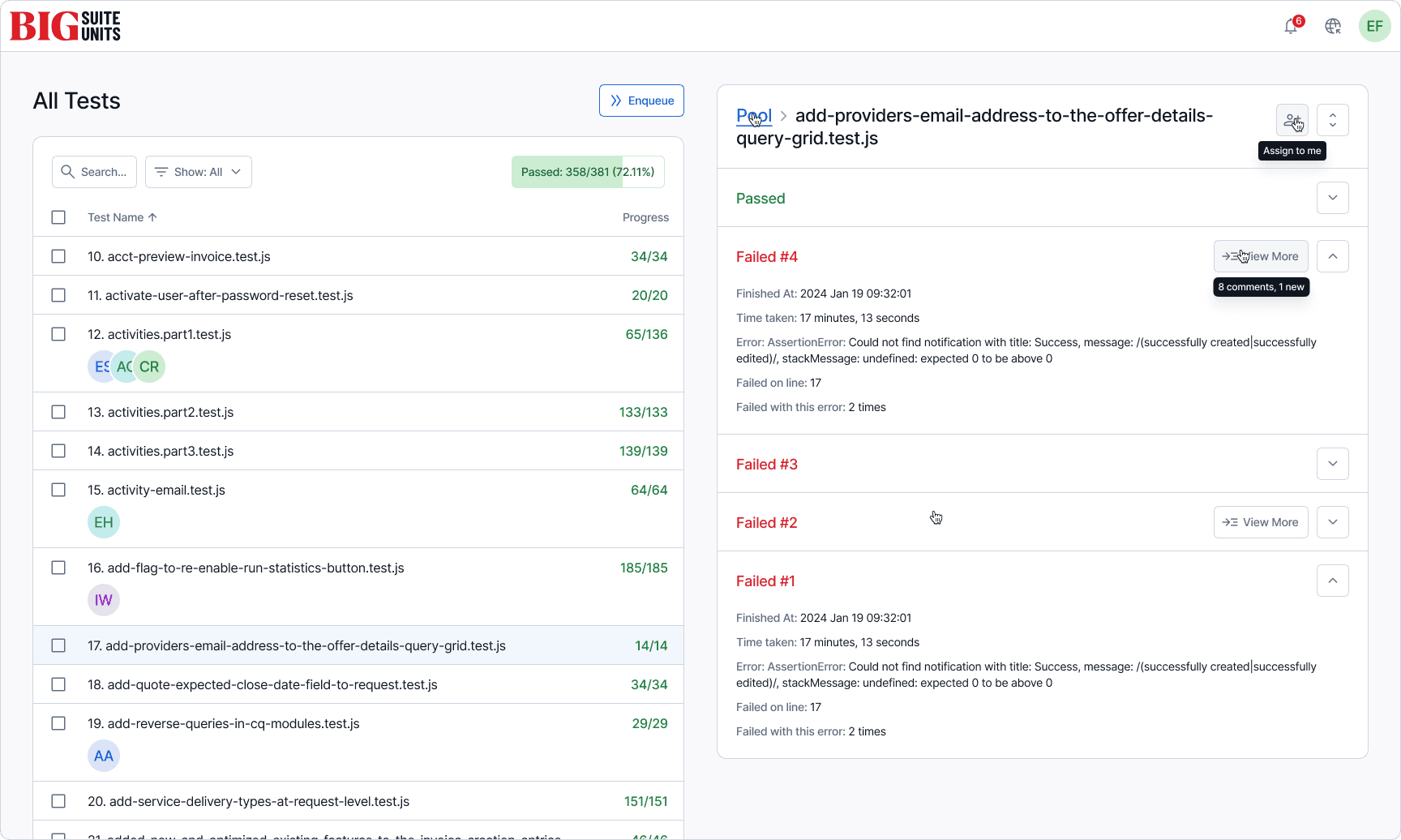
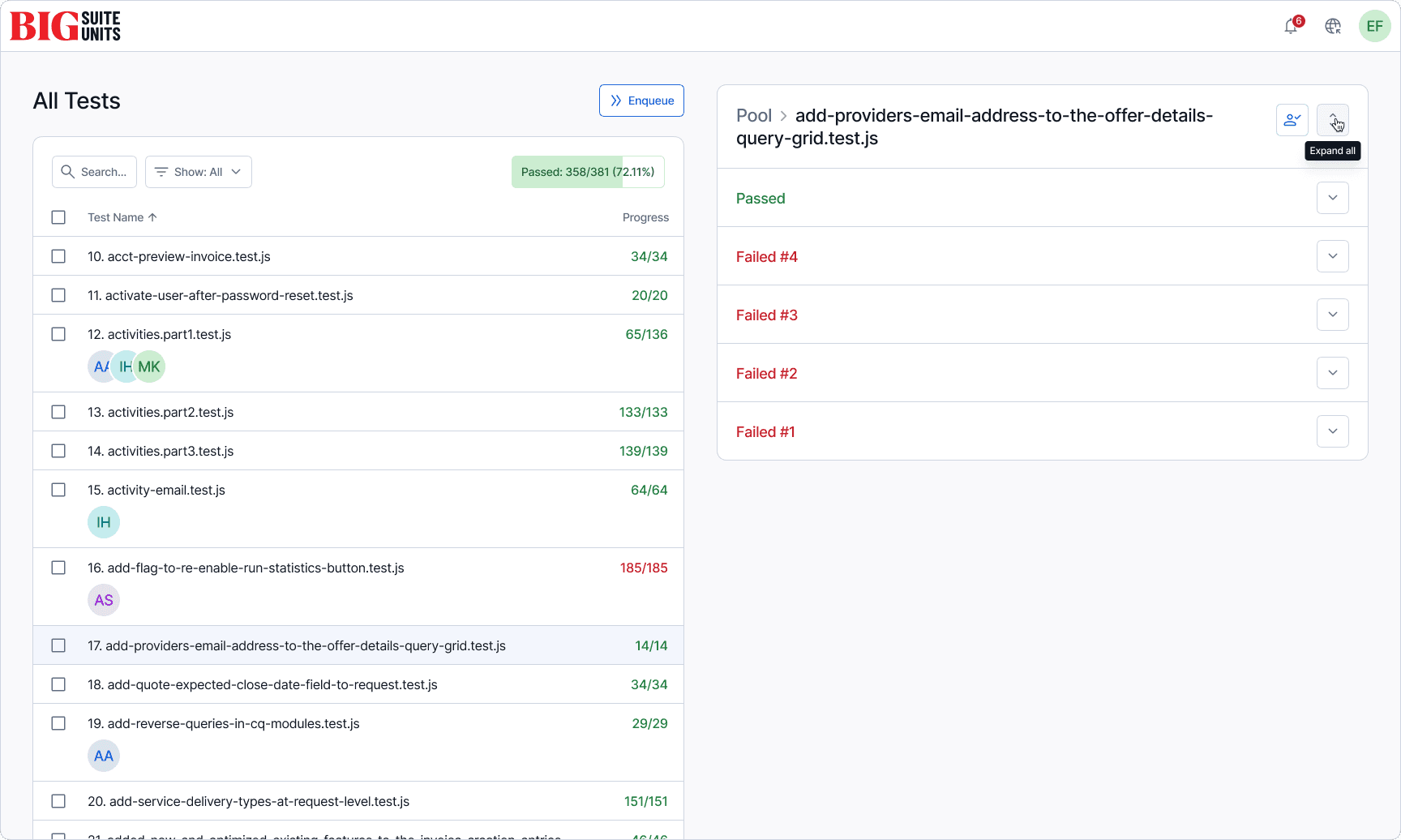
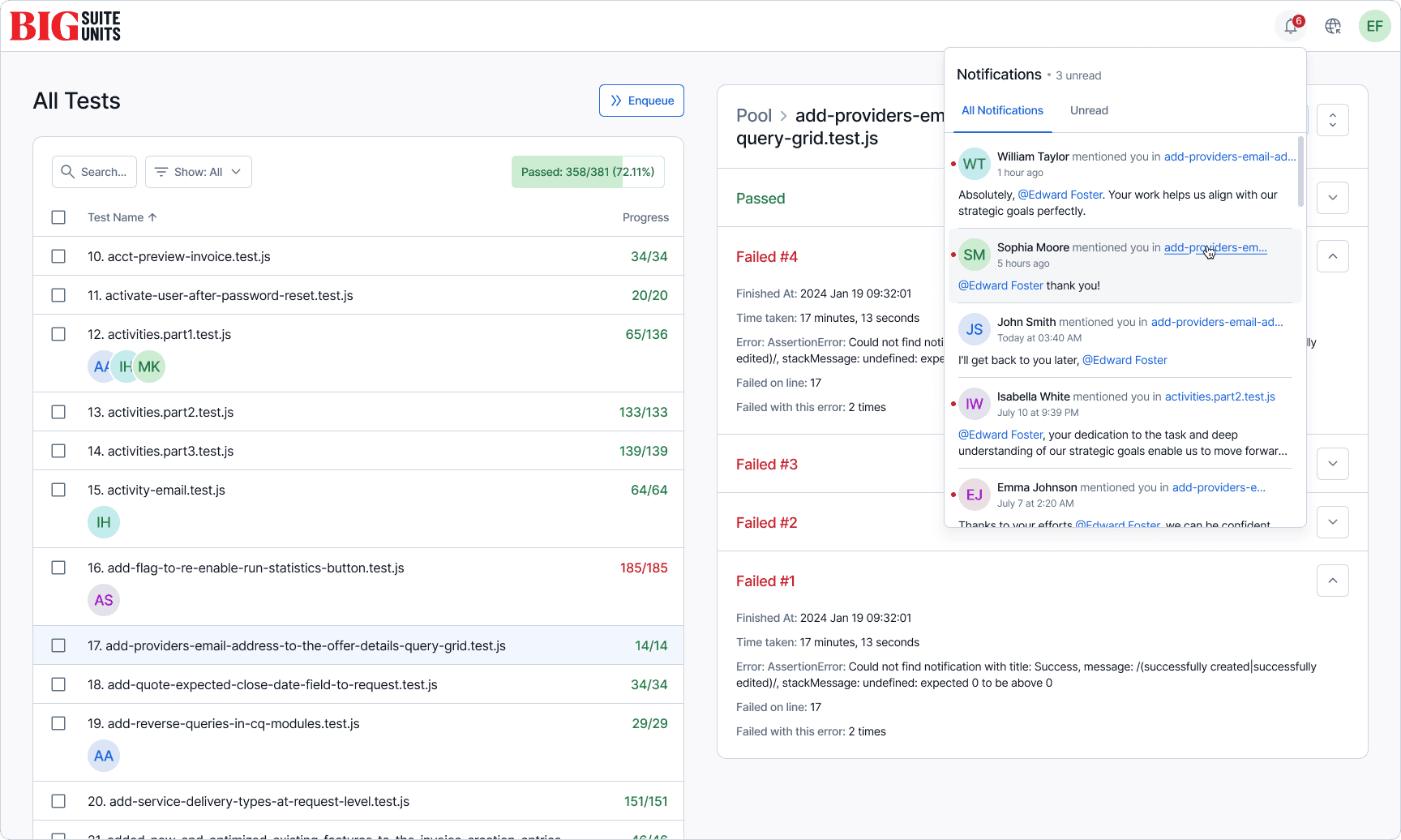
Test Review & Comments Modal
Test Suite View
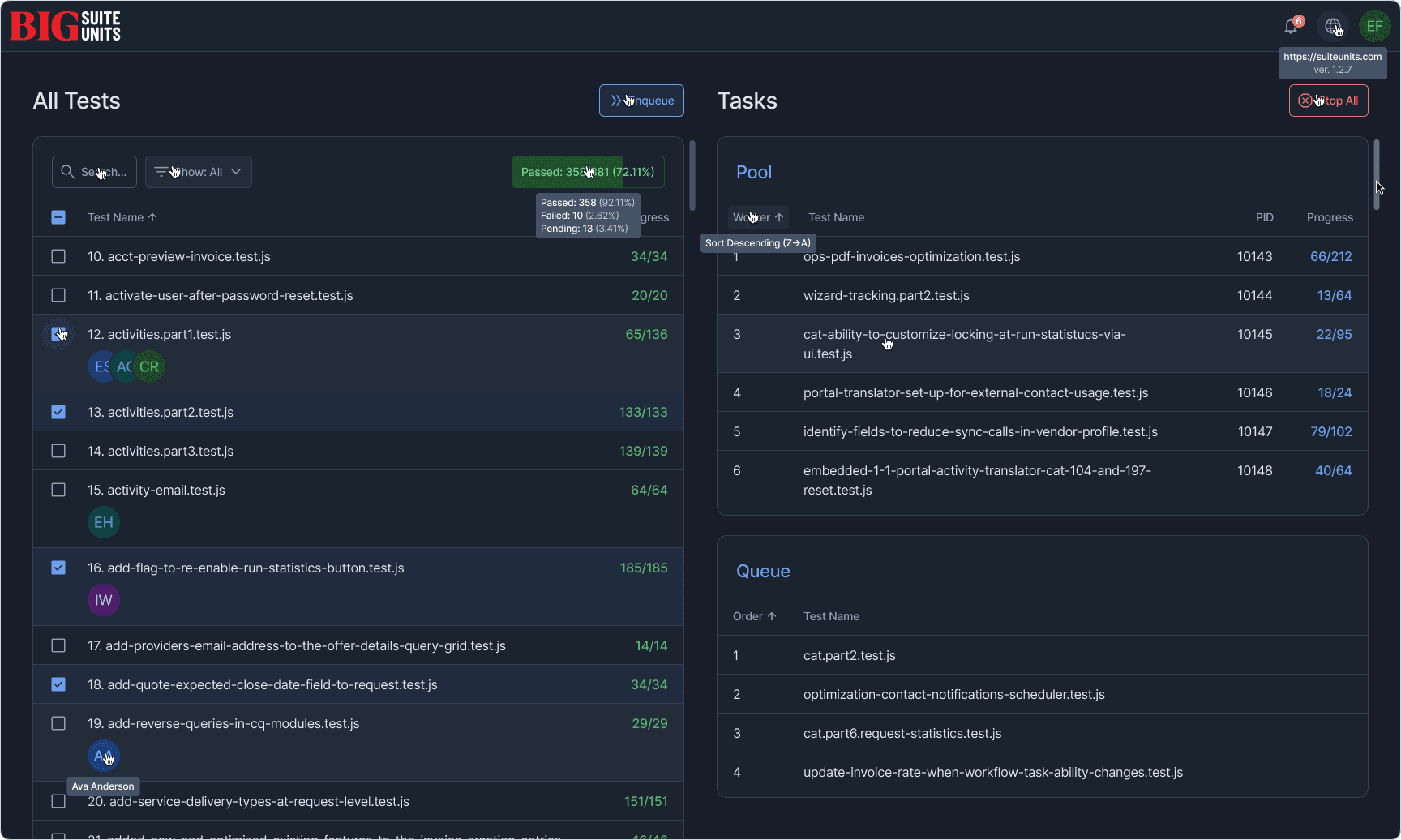
Test Suite View -> Pool Detail
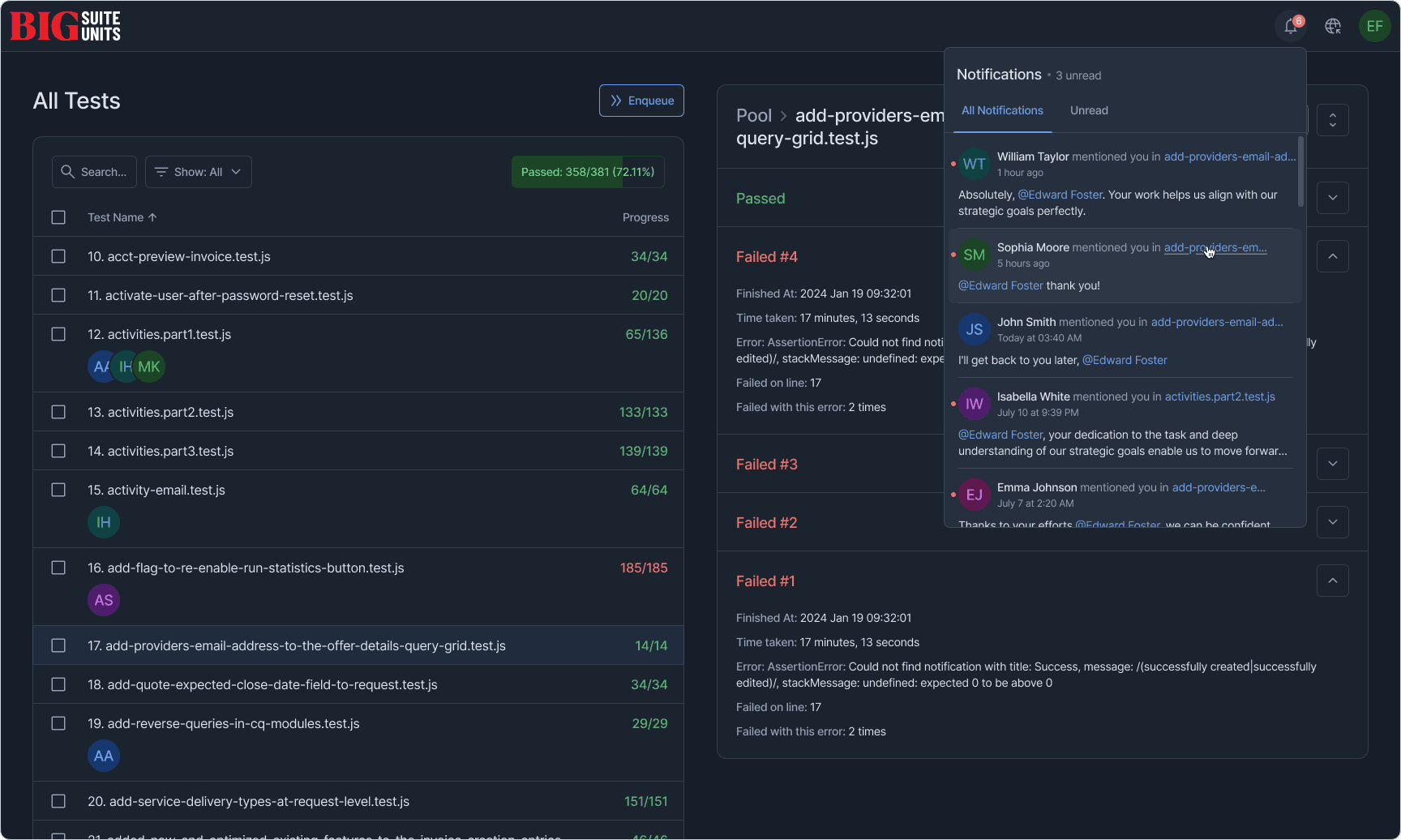
Test Review & Comments Modal
No items
Test Suite View
Test Suite View -> Pool Detail
Test Review & Comments Modal
Test Suite View
Test Suite View -> Pool Detail
Test Review & Comments Modal
No items
Test Suite View
Test Suite View -> Pool Detail
Test Review & Comments Modal
Test Suite View
Test Suite View -> Pool Detail
Test Review & Comments Modal
No items
Test Suite View
Test Suite View -> Pool Detail
Test Review & Comments Modal
Test Suite View
Test Suite View -> Pool Detail
Test Review & Comments Modal