BIG LanguageVault — Translation Management SaaS Platform
Solo Product Designer
Solo Product Designer
Solo Product Designer
Solo Product Designer
Full Platform Redesign
UX Architecture
Information Hierarchy
High-Fidelity UI
Design System
Multi-Role Access Logic
Full Platform Redesign
UX Architecture
Information Hierarchy
High-Fidelity UI
Design System
Multi-Role Access Logic
Full Platform Redesign
UX Architecture
Information Hierarchy
High-Fidelity UI
Design System
Multi-Role Access Logic
Full Platform Redesign
UX Architecture
Information Hierarchy
High-Fidelity UI
Design System
Multi-Role Access Logic
Aug 2022 — Aug 2024
Aug 2022 — Aug 2024
Aug 2022 — Aug 2024
Aug 2022 — Aug 2024
Login-Only
Login-Only
Login-Only
Login-Only
01. Product Context & Constraint
LanguageVault is an enterprise translation management platform — handling requests, file workflows, billing, and user management across multiple access levels. The existing interface was built entirely by engineers over years, with no design involvement. Every feature worked; nothing was easy to use
The real challenge wasn't any single screen — it was making sense of a system that had grown organically into dozens of interconnected views, each with its own logic, layout, and assumptions about the user
02. Design Approach
The first task was mapping the entire system — understanding every user type, permission level, and workflow before touching a single screen. With no direct user access and no internal UX expertise on the client side, every decision had to be derived from the product's own logic and stakeholder input
The core design principle: don't simplify the complexity — make it navigable. That meant structured progressive disclosure across every section of the platform — dashboard, request management, tasks, billing, user administration, company settings. Each area had its own accumulated UX debt and its own information density problem
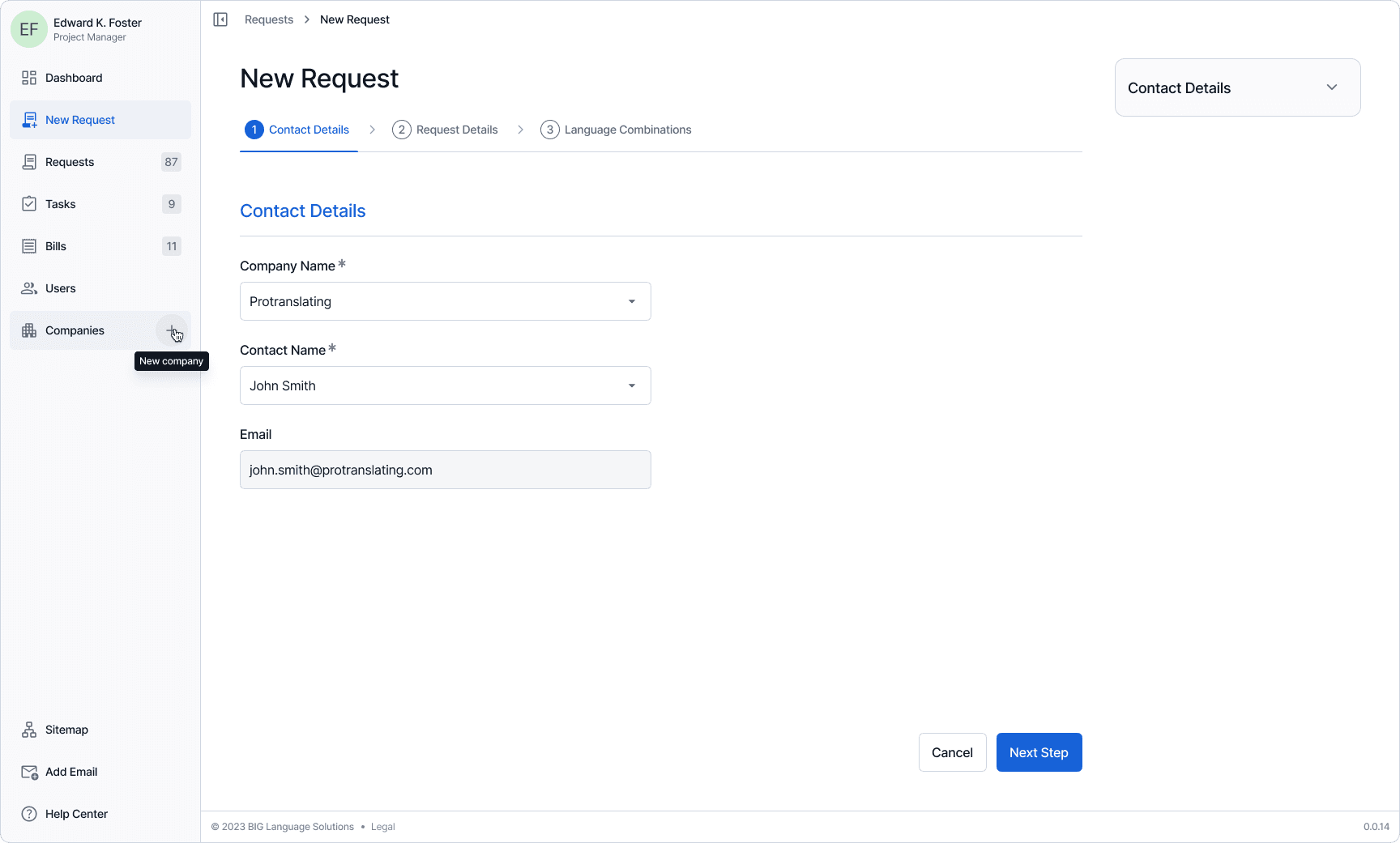
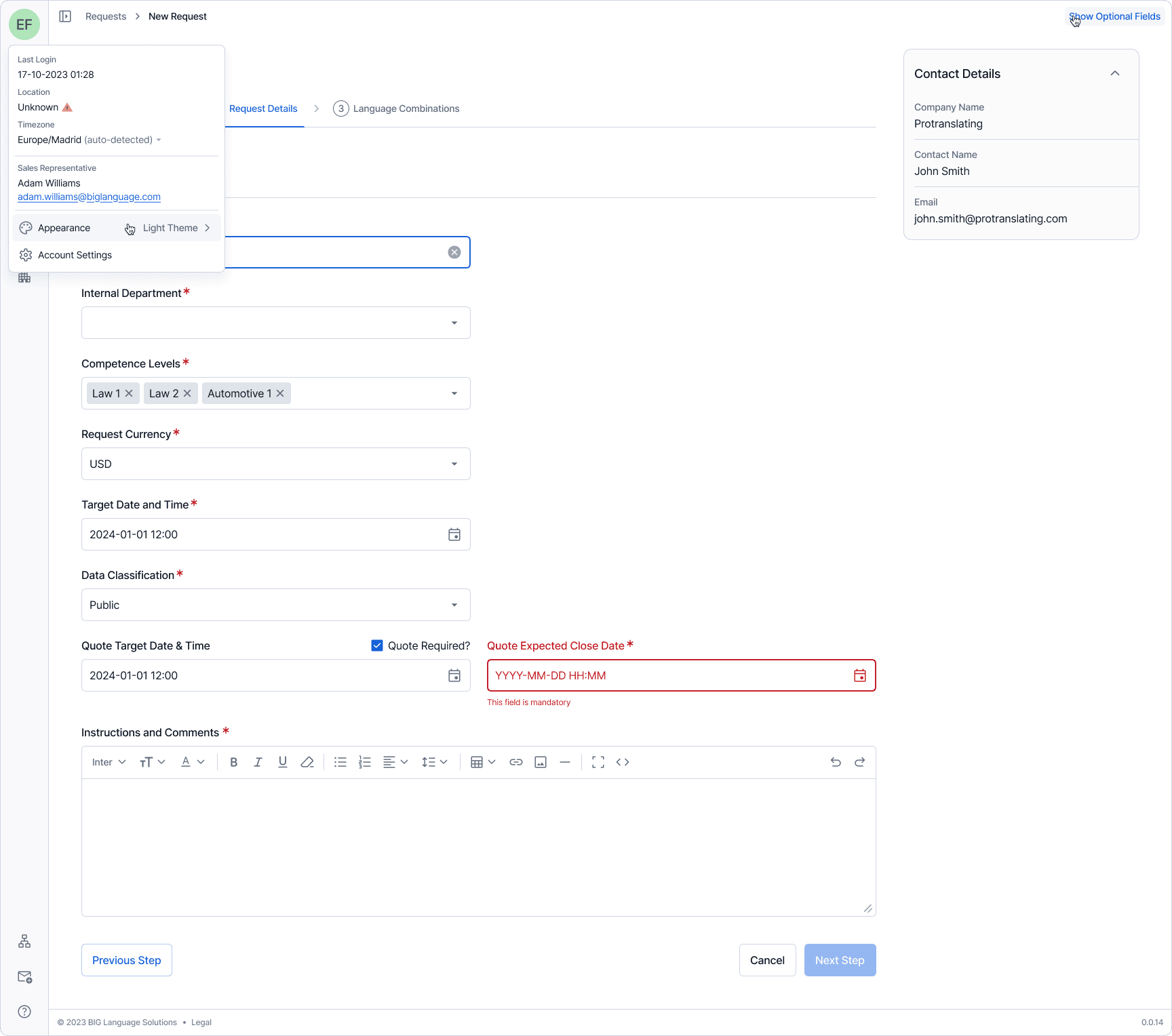
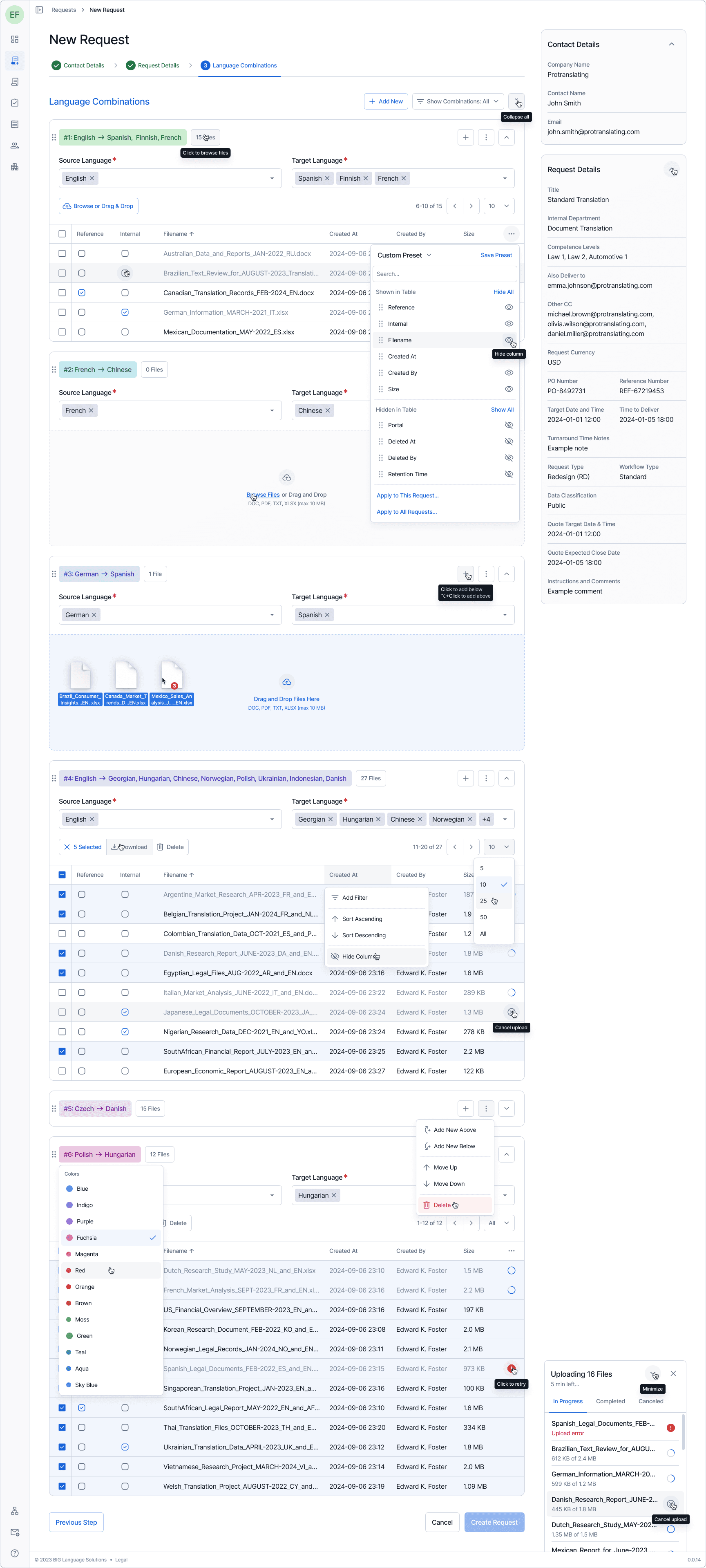
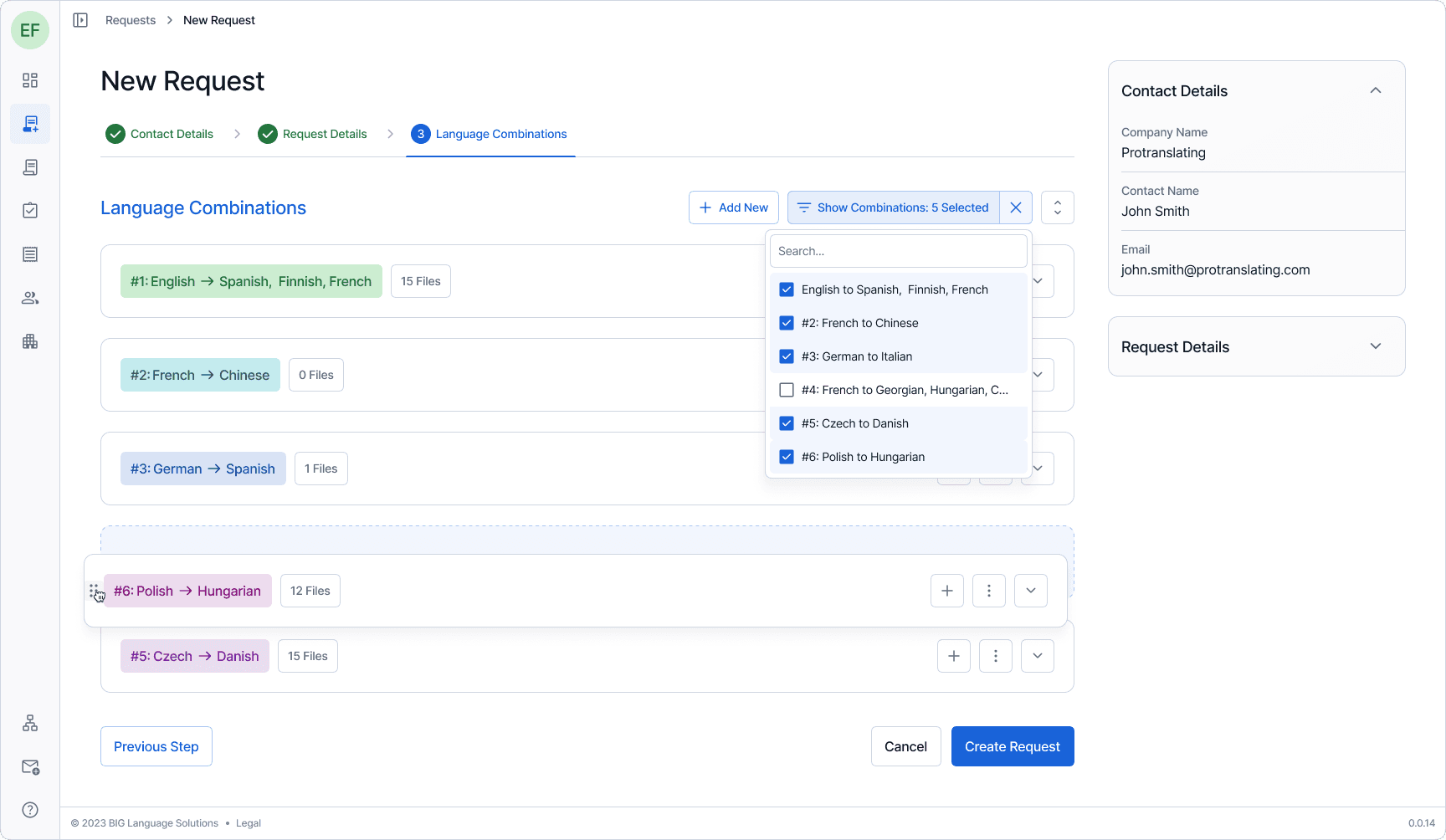
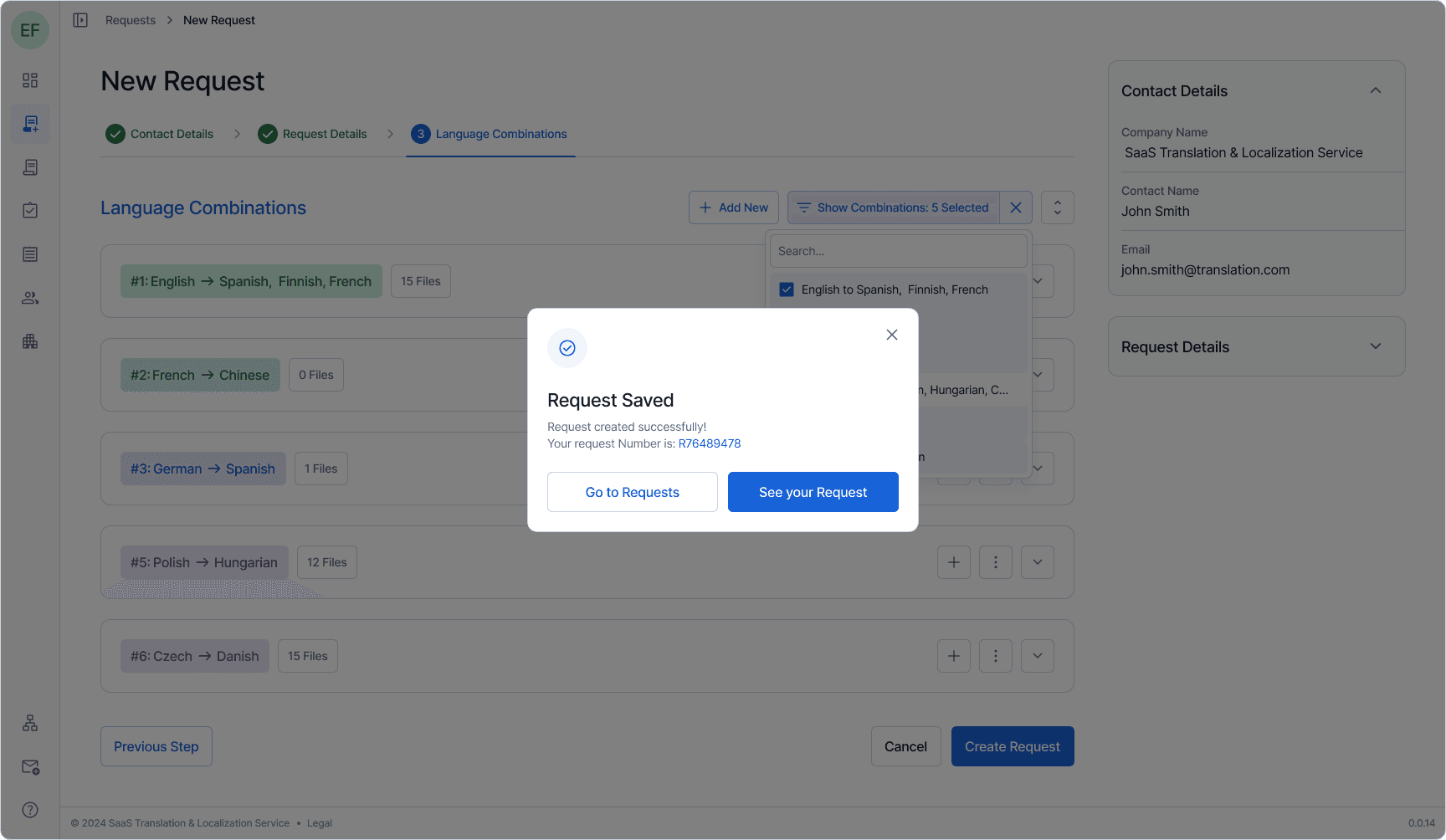
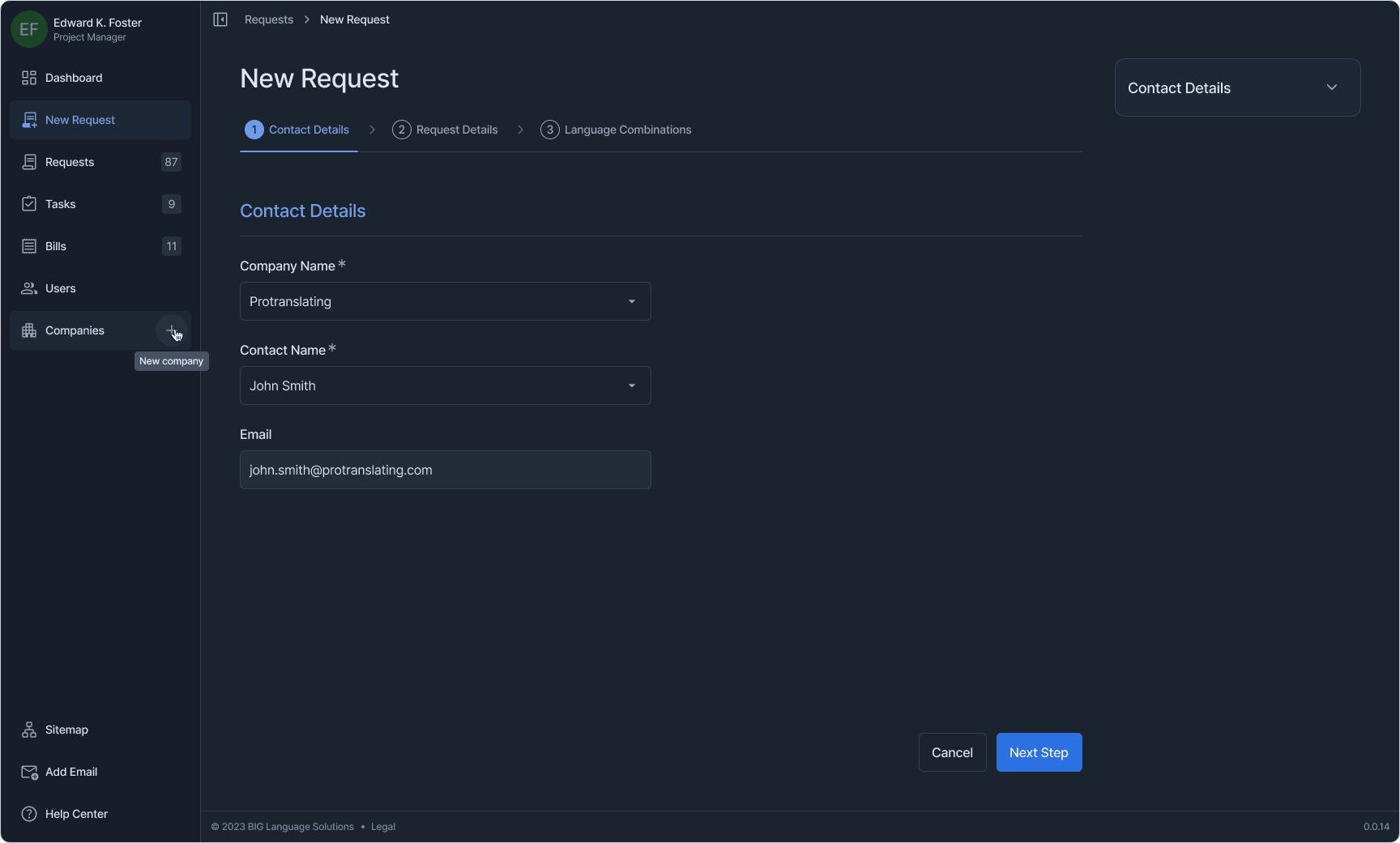
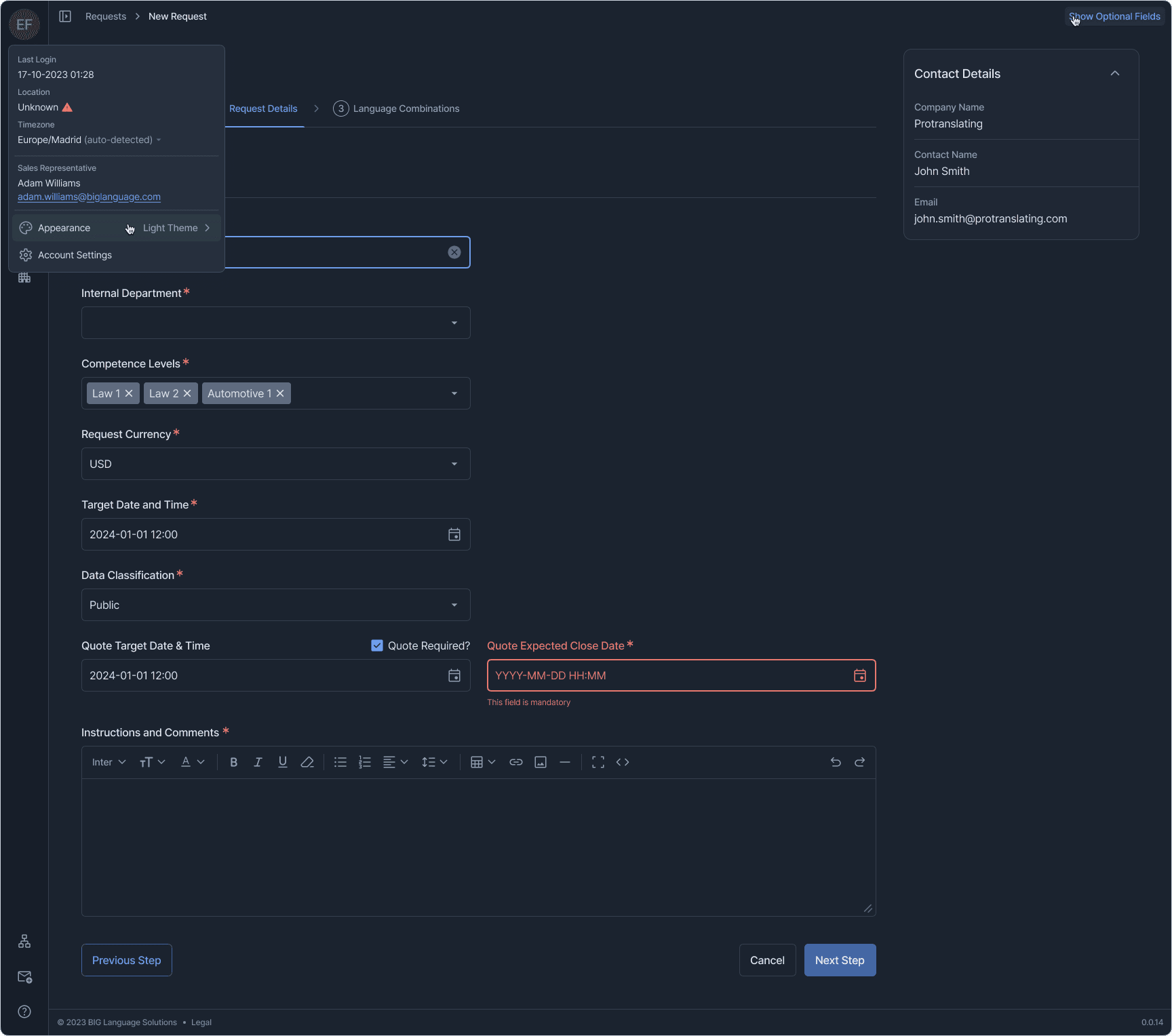
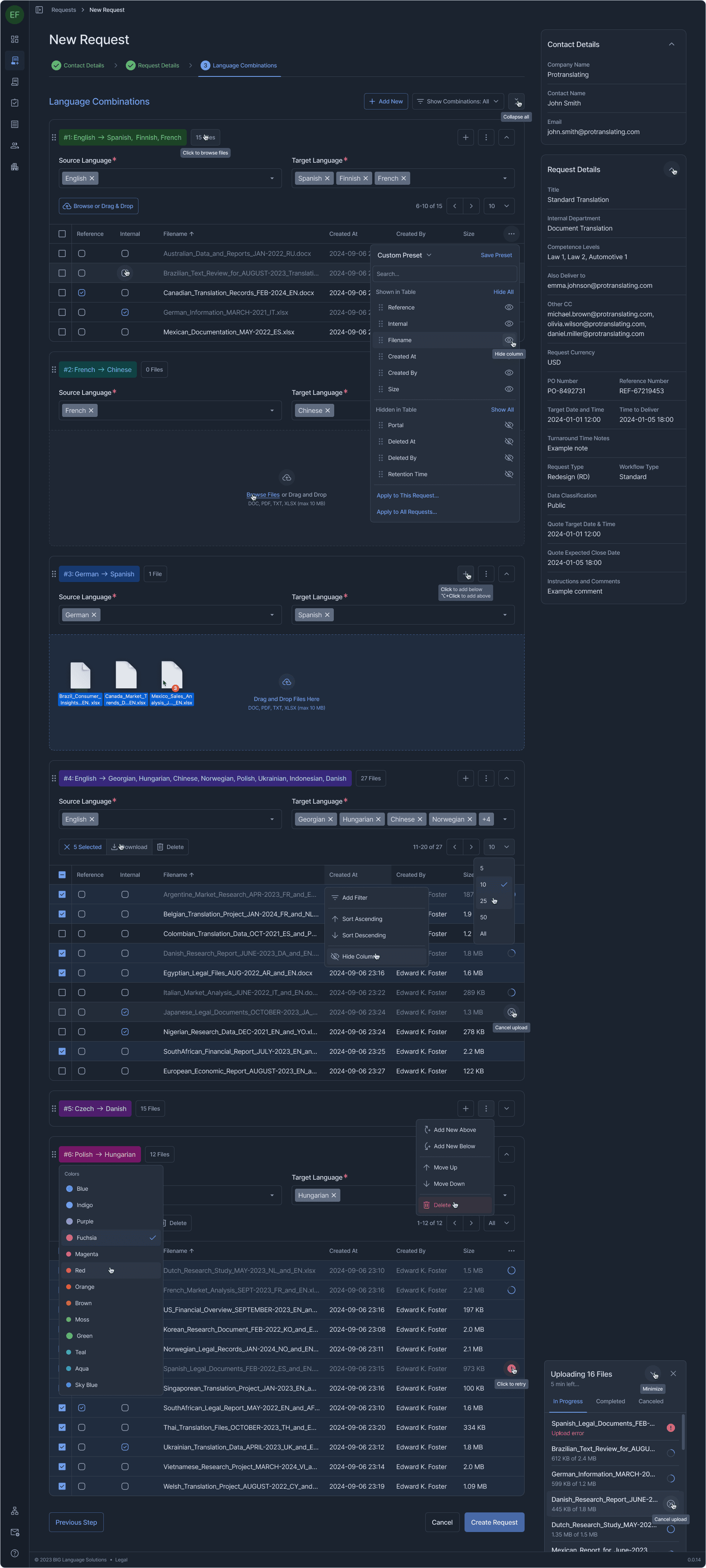
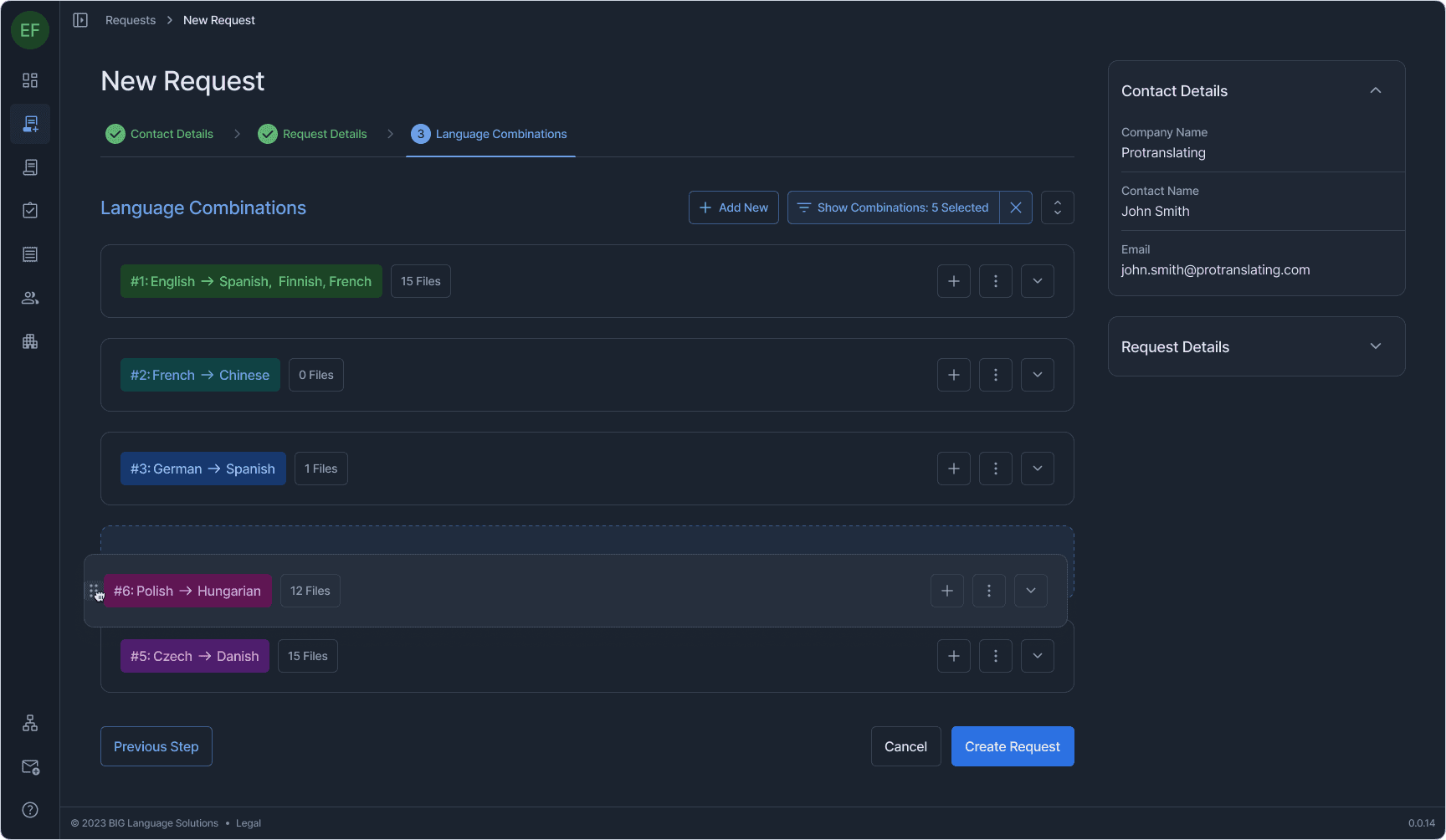
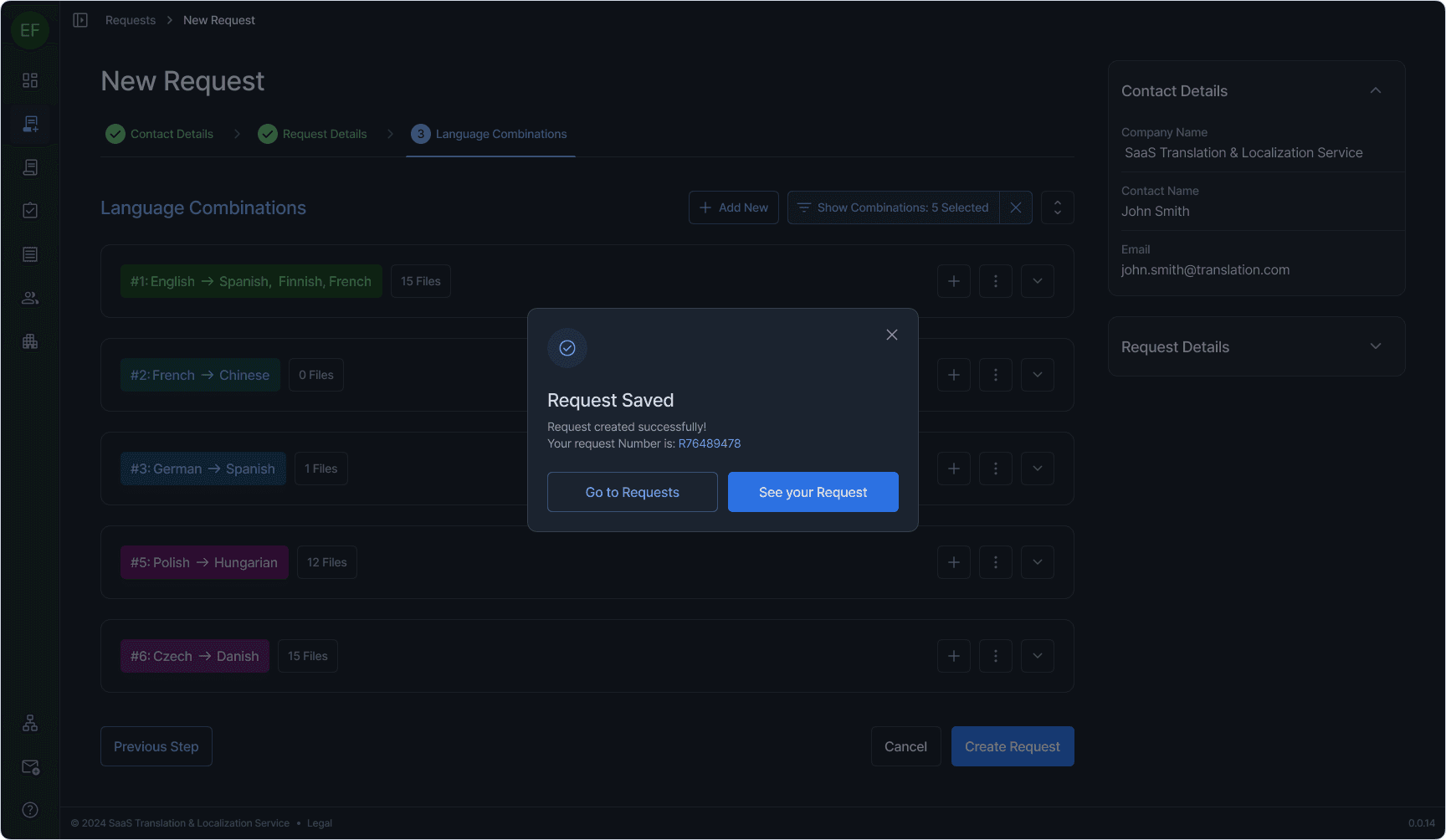
One example: translation requests can involve multiple language pairs, each with its own file set, metadata, and status. The new request flow uses a stepped wizard with a persistent context sidebar, language combinations that expand and collapse independently, inline file management, and bulk operations — all within a single coherent view. Every other section followed the same logic: surface what matters, let the user drill deeper on demand, never hide context
03. System & Outcome
A complete redesign covering the full platform — every section, every access level, every state. Light and dark themes, consistent component logic, and a UI system built to absorb future features without accumulating more design debt
The platform went from functional-but-hostile to something teams can actually onboard onto — without losing any of the depth that enterprise translation workflows demand
01. Product Context & Constraint
LanguageVault is an enterprise translation management platform — handling requests, file workflows, billing, and user management across multiple access levels. The existing interface was built entirely by engineers over years, with no design involvement. Every feature worked; nothing was easy to use
The real challenge wasn't any single screen — it was making sense of a system that had grown organically into dozens of interconnected views, each with its own logic, layout, and assumptions about the user
Read All
01. Product Context & Constraint
LanguageVault is an enterprise translation management platform — handling requests, file workflows, billing, and user management across multiple access levels. The existing interface was built entirely by engineers over years, with no design involvement. Every feature worked; nothing was easy to use
The real challenge wasn't any single screen — it was making sense of a system that had grown organically into dozens of interconnected views, each with its own logic, layout, and assumptions about the user
02. Design Approach
The first task was mapping the entire system — understanding every user type, permission level, and workflow before touching a single screen. With no direct user access and no internal UX expertise on the client side, every decision had to be derived from the product's own logic and stakeholder input
The core design principle: don't simplify the complexity — make it navigable. That meant structured progressive disclosure across every section of the platform — dashboard, request management, tasks, billing, user administration, company settings. Each area had its own accumulated UX debt and its own information density problem
One example: translation requests can involve multiple language pairs, each with its own file set, metadata, and status. The new request flow uses a stepped wizard with a persistent context sidebar, language combinations that expand and collapse independently, inline file management, and bulk operations — all within a single coherent view. Every other section followed the same logic: surface what matters, let the user drill deeper on demand, never hide context
03. System & Outcome
A complete redesign covering the full platform — every section, every access level, every state. Light and dark themes, consistent component logic, and a UI system built to absorb future features without accumulating more design debt
The platform went from functional-but-hostile to something teams can actually onboard onto — without losing any of the depth that enterprise translation workflows demand
01. Product Context & Constraint
LanguageVault is an enterprise translation management platform — handling requests, file workflows, billing, and user management across multiple access levels. The existing interface was built entirely by engineers over years, with no design involvement. Every feature worked; nothing was easy to use
The real challenge wasn't any single screen — it was making sense of a system that had grown organically into dozens of interconnected views, each with its own logic, layout, and assumptions about the user
Read All
No items
Requests -> New Request
Requests -> New Request
No items
Requests -> New Request
Requests -> New Request
No items
Requests -> New Request
Requests -> New Request
No items
Requests -> New Request
Requests -> New Request