BIG LanguageVault — Multi-Brand Translation SaaS
Role
Senior Product Designer
Mode
Sole In-House Ownership at BIG
Scope
Core Flow Redesign
UX Architecture
Information Hierarchy
High-Fidelity UI
Scalable Design System
Multi-Role Access Logic
Timeline
Aug 2022 — Aug 2024
Figma
Live
Login-Only
“Our platform had grown for a decade without a design owner. Denys stepped in and built a cohesive system that finally made sense of our fragmented brands and diverse user workflows. I trusted his judgment to navigate our most difficult design decisions.”
— Lydia Clavel, Sr. Product Manager
Overview
LanguageVault is the enterprise translation management platform behind BIG Language Solutions, running three brands on a single codebase: BLS, PTS, and BIG IP. It handles every step of a translation order — intake, quoting, vendor sourcing, workflow orchestration, delivery, billing
I was the platform's first in-house designer. My scope ran from continuous improvements across the live system through to a foundational redesign of the next-generation product. Neither side of the work could stand still while the other moved. No formal user research was part of the engagement; decisions came from product logic and from PMs who'd been running this thing for years
Three Platforms & Five Roles
What runs as a single product is actually three. BLS, PTS, and BIG IP share a codebase but each carry their own templates, terminology, default workflows, and stakeholder expectations
Five user roles live inside each brand: Staff, Contact, Admin, Manager, Vendor. Two intersecting permission systems sit on top: Group Roles and Individual Roles, gating fields, sections, and entire pages by who's logged in. The same screen renders dozens of ways. A staff PM sees one version of the request page; a contact at a regulated client sees another; a vendor assessing a task sees a third
Two Tracks of Work
For two years, the work ran in parallel. One track was incremental: dozens of stakeholder-driven flows reworked across the live platform, plus a full rebuild of around 40 PDF templates spanning quotes, invoices, bills, and reports across five brand identities. The other was foundational: redesigning the next-generation product on a clean design system. Neither could stop while the other moved
Designing the Replacement
For the redesign, I built a design system of 200+ components on a tokenised colour and typography scale, plus the core flows of every role: request creation and edition for staff and contacts, quoting across standard and IP work, task detail and CAT-tool workflows for vendors, user and permission management. The principle that organised everything: don't simplify the complexity — make it navigable. Only request creation and edition can be shown publicly here, but the same principles ran through every section of the redesign
Rebuilding Request Creation
The legacy request page stacked everything on one screen: thirty-plus fields in two columns, language pairs and source files crammed into the same view, optional and required inputs visually identical. A staff user had to scroll, parse, and assume
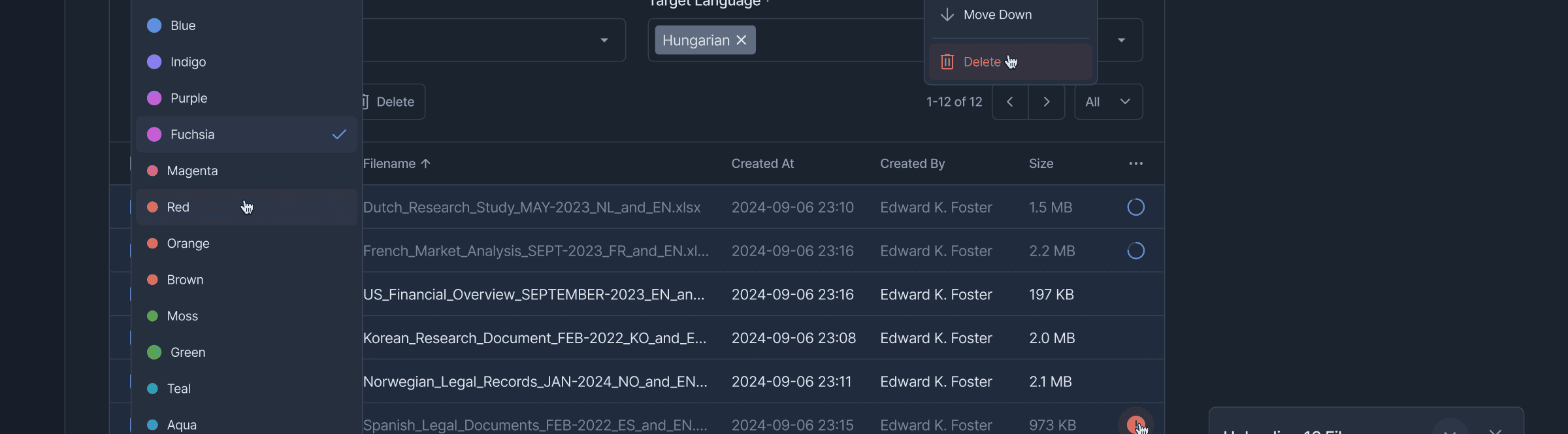
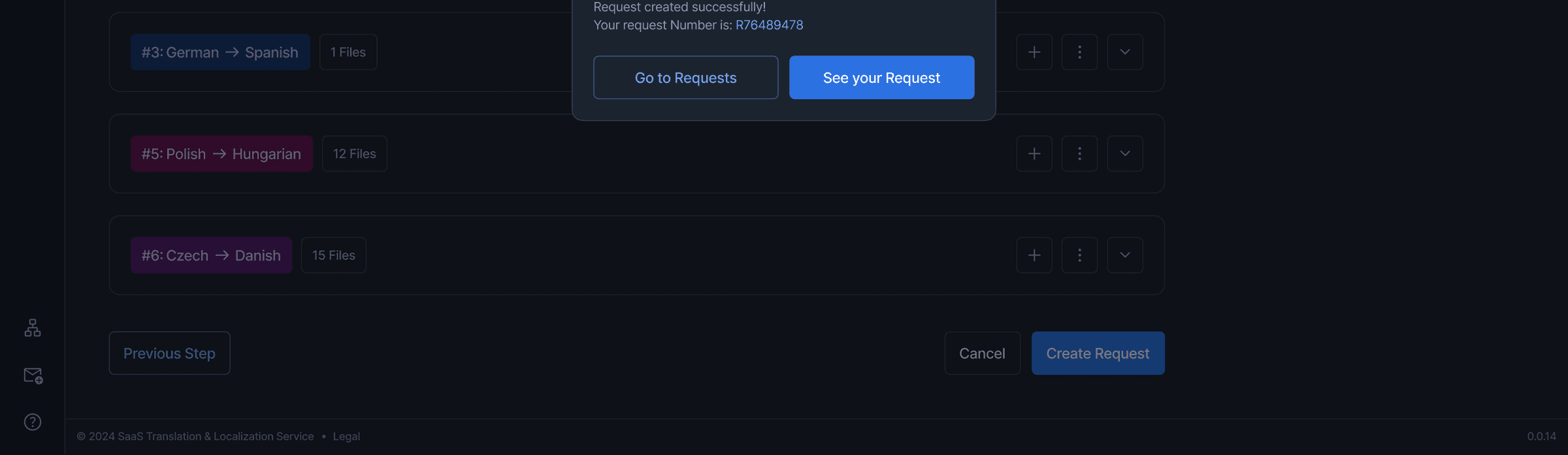
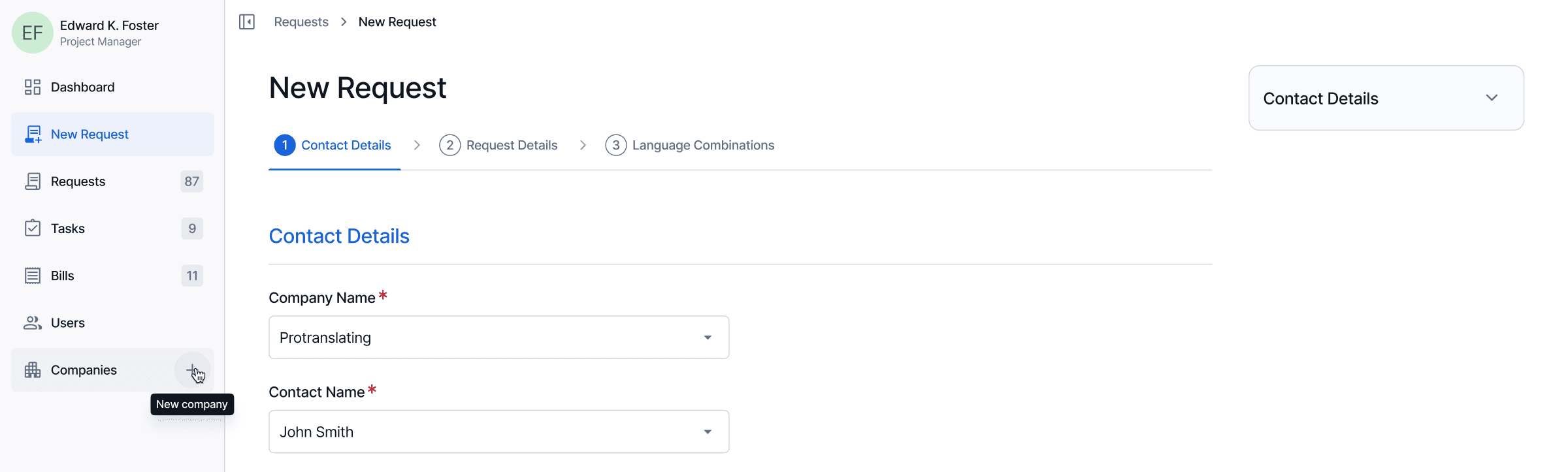
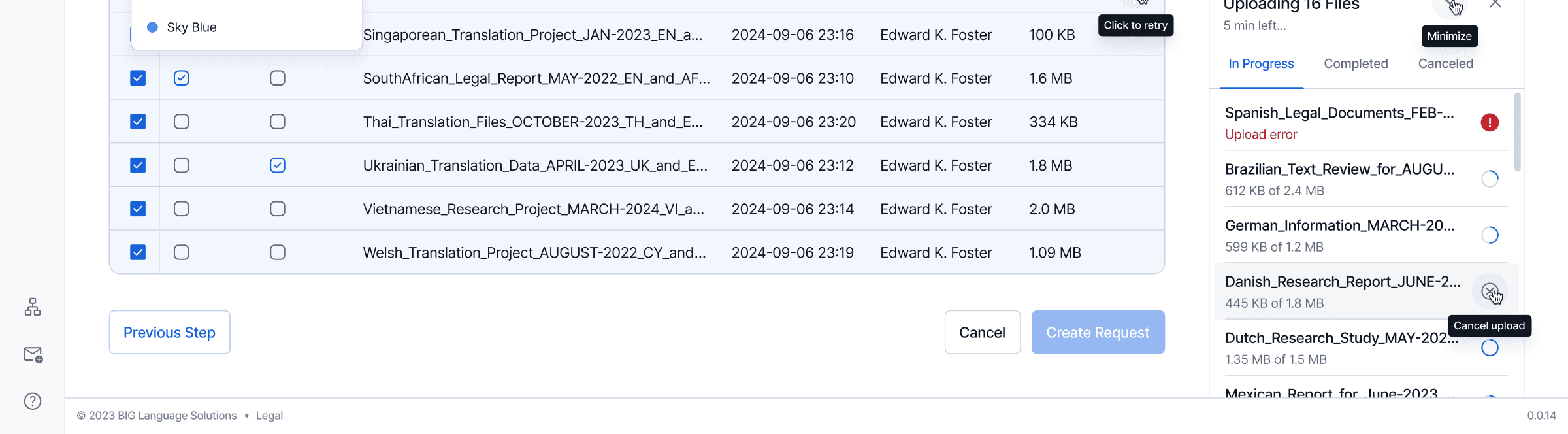
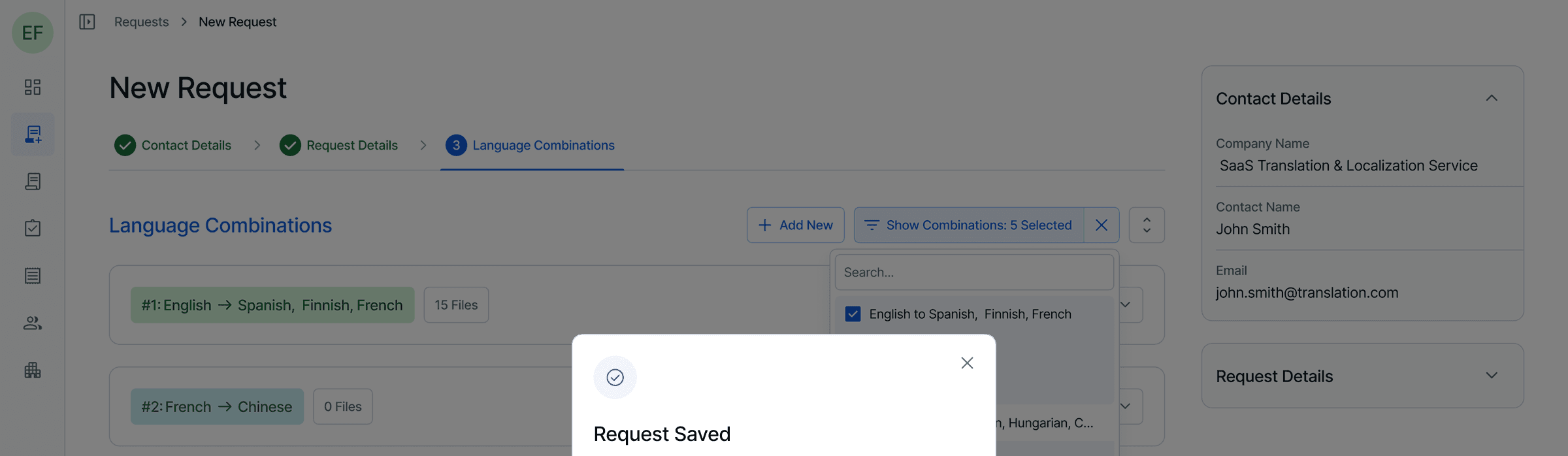
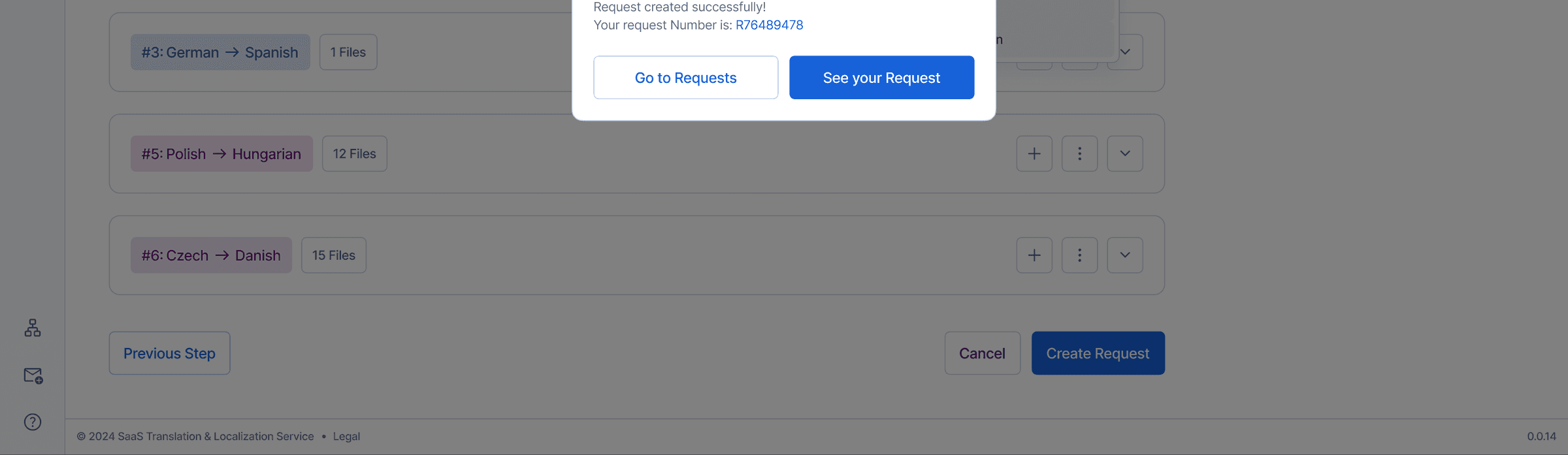
I redesigned it as three structured steps: Contact, Request, Languages. Each holds only the decisions native to it, with optional fields collapsed by default and a context sidebar carrying forward what's already been decided. Inside Languages, combinations expand and collapse independently, files attach inline per pair, and bulk operations work across pairs without leaving the screen. The same logic ran through every section: surface what matters at the level the user is on, keep depth one click away, never lose context
What Two Years Built
The two tracks were never separate work. Patterns from incremental fixes became defaults in the redesign; constraints from the redesign changed which fixes were worth doing. Live stakeholder pressure exposed which parts of the platform's complexity were essential, and which were just artefacts of the legacy UI
By the end, I had become the single design owner across all three brands, every flow followed a consistent design language, and the next-generation product had a foundation that didn't depend on the legacy UI underneath it
BIG LanguageVault — Multi-Brand Translation SaaS
Role
Senior Product Designer
Mode
Sole In-House Ownership at BIG
Scope
Core Flow Redesign
UX Architecture
Information Hierarchy
High-Fidelity UI
Scalable Design System
Multi-Role Access Logic
Timeline
Aug 2022 — Aug 2024
Figma
Live
Login-Only
“Our platform had grown for a decade without a design owner. Denys stepped in and built a cohesive system that finally made sense of our fragmented brands and diverse user workflows. I trusted his judgment to navigate our most difficult design decisions.”
— Lydia Clavel, Sr. Product Manager
Overview
LanguageVault is the enterprise translation management platform behind BIG Language Solutions, running three brands on a single codebase: BLS, PTS, and BIG IP. It handles every step of a translation order — intake, quoting, vendor sourcing, workflow orchestration, delivery, billing
I was the platform's first in-house designer. My scope ran from continuous improvements across the live system through to a foundational redesign of the next-generation product. Neither side of the work could stand still while the other moved. No formal user research was part of the engagement; decisions came from product logic and from PMs who'd been running this thing for years
Three Platforms & Five Roles
What runs as a single product is actually three. BLS, PTS, and BIG IP share a codebase but each carry their own templates, terminology, default workflows, and stakeholder expectations
Five user roles live inside each brand: Staff, Contact, Admin, Manager, Vendor. Two intersecting permission systems sit on top: Group Roles and Individual Roles, gating fields, sections, and entire pages by who's logged in. The same screen renders dozens of ways. A staff PM sees one version of the request page; a contact at a regulated client sees another; a vendor assessing a task sees a third
Two Tracks of Work
For two years, the work ran in parallel. One track was incremental: dozens of stakeholder-driven flows reworked across the live platform, plus a full rebuild of around 40 PDF templates spanning quotes, invoices, bills, and reports across five brand identities. The other was foundational: redesigning the next-generation product on a clean design system. Neither could stop while the other moved
Designing the Replacement
For the redesign, I built a design system of 200+ components on a tokenised colour and typography scale, plus the core flows of every role: request creation and edition for staff and contacts, quoting across standard and IP work, task detail and CAT-tool workflows for vendors, user and permission management. The principle that organised everything: don't simplify the complexity — make it navigable. Only request creation and edition can be shown publicly here, but the same principles ran through every section of the redesign
Rebuilding Request Creation
The legacy request page stacked everything on one screen: thirty-plus fields in two columns, language pairs and source files crammed into the same view, optional and required inputs visually identical. A staff user had to scroll, parse, and assume
I redesigned it as three structured steps: Contact, Request, Languages. Each holds only the decisions native to it, with optional fields collapsed by default and a context sidebar carrying forward what's already been decided. Inside Languages, combinations expand and collapse independently, files attach inline per pair, and bulk operations work across pairs without leaving the screen. The same logic ran through every section: surface what matters at the level the user is on, keep depth one click away, never lose context
What Two Years Built
The two tracks were never separate work. Patterns from incremental fixes became defaults in the redesign; constraints from the redesign changed which fixes were worth doing. Live stakeholder pressure exposed which parts of the platform's complexity were essential, and which were just artefacts of the legacy UI
By the end, I had become the single design owner across all three brands, every flow followed a consistent design language, and the next-generation product had a foundation that didn't depend on the legacy UI underneath it
BIG LanguageVault — Multi-Brand Translation SaaS
Role
Senior Product Designer
Mode
Sole In-House Ownership at BIG
Scope
Core Flow Redesign
UX Architecture
Information Hierarchy
High-Fidelity UI
Scalable Design System
Multi-Role Access Logic
Timeline
Aug 2022 — Aug 2024
Figma
Live
Login-Only
“Our platform had grown for a decade without a design owner. Denys stepped in and built a cohesive system that finally made sense of our fragmented brands and diverse user workflows. I trusted his judgment to navigate our most difficult design decisions.”
— Lydia Clavel, Sr. Product Manager
Overview
LanguageVault is the enterprise translation management platform behind BIG Language Solutions, running three brands on a single codebase: BLS, PTS, and BIG IP. It handles every step of a translation order — intake, quoting, vendor sourcing, workflow orchestration, delivery, billing
I was the platform's first in-house designer. My scope ran from continuous improvements across the live system through to a foundational redesign of the next-generation product. Neither side of the work could stand still while the other moved. No formal user research was part of the engagement; decisions came from product logic and from PMs who'd been running this thing for years
Read More
BIG LanguageVault — Multi-Brand Translation SaaS
Role
Senior Product Designer
Mode
Sole In-House Ownership at BIG
Scope
Core Flow Redesign
UX Architecture
Information Hierarchy
High-Fidelity UI
Scalable Design System
Multi-Role Access Logic
Timeline
Aug 2022 — Aug 2024
Figma
Live
Login-Only
“Our platform had grown for a decade without a design owner. Denys stepped in and built a cohesive system that finally made sense of our fragmented brands and diverse user workflows. I trusted his judgment to navigate our most difficult design decisions.”
— Lydia Clavel, Sr. Product Manager
Overview
LanguageVault is the enterprise translation management platform behind BIG Language Solutions, running three brands on a single codebase: BLS, PTS, and BIG IP. It handles every step of a translation order — intake, quoting, vendor sourcing, workflow orchestration, delivery, billing
I was the platform's first in-house designer. My scope ran from continuous improvements across the live system through to a foundational redesign of the next-generation product. Neither side of the work could stand still while the other moved. No formal user research was part of the engagement; decisions came from product logic and from PMs who'd been running this thing for years
Read More
Light Theme
Dark Theme
Light Theme
Dark Theme
Light Theme
Dark Theme
New Request




New Request